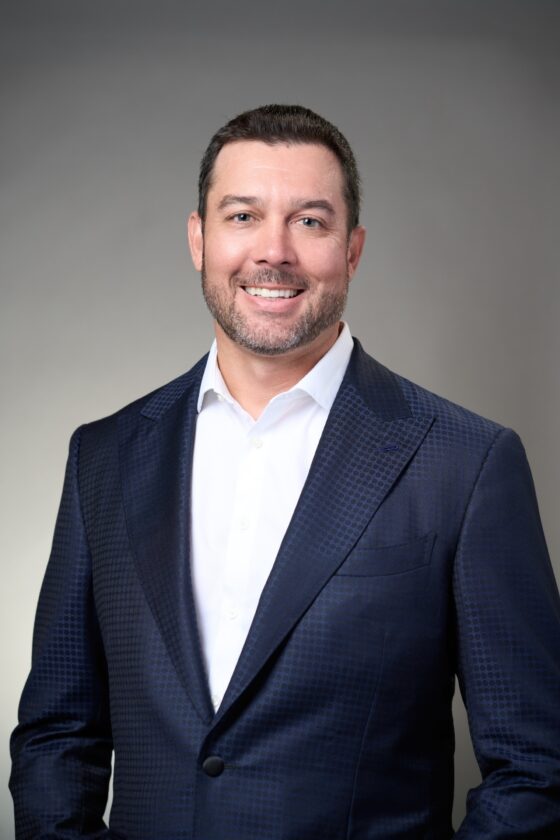
Print & Promo Marketing’s ongoing feature series, Executive Perspectives, tells the personal entrepreneurial stories of leading professionals in the print and promotional products industry. This month, Sean Ono, co-founder of Eagle Promotions (asi/185320), relays how his Las Vegas-based distributor grew thanks to a bit of a gamble.
PPM: How did you get started in this industry?
Sean Ono: My first real education in business came from my family’s lumber yard. I did every job in that place, from the ground up. I was hungry to move into management and was going to college at night to make it happen, but my father had a simple rule: Graduate first. Then, almost by accident, the gentleman selling us our T-shirts and hats was looking to break away from his partner and start something new in Las Vegas. He needed someone to take a chance with him, and I needed a new challenge. So I took the leap. He mentored me for two years, taught me the business inside and out, and when the time was right, I bought him out. What started as an unexpected detour became a 30-plus-year career building one of the largest promotional and branded apparel companies in the country. Sometimes the best opportunities don’t knock. They just show up on a delivery truck.
PPM: How do you set goals for yourself and for your business?
SO: I’m not a spreadsheet-first guy. I lead with gut instinct sharpened by over 30 years of experience. I’ve seen enough market cycles, client wins and hard lessons to know when something feels right and when it doesn’t. That said, instinct without execution is just a feeling. Once I lock onto a direction, I surround myself with a team I trust to pressure test it and build the road map. My goal-setting is really about knowing where we need to go before the data catches up to tell me why.
PPM: How does the economy continue to affect the industry?
SO: Tariffs have been one of the most disruptive forces we’ve navigated, and at Eagle we feel it across both of our divisions. On the corporate and promotional side, clients are watching every dollar. On our retail side, where we design and produce custom garments for major brands like Disney and Hard Rock, the impact has been even more direct. Goods coming in took a serious hit, and our clients felt it. What it forced us to do was become smarter global sourcers, diversifying manufacturing across multiple countries so our clients aren’t exposed to any single point of risk. Disruption either breaks you or makes you sharper. For us, it made us sharper.
PPM: What are some of the biggest changes or challenges the industry will face?
SO: The brands that survive the next decade will be the ones that can move fast and absorb uncertainty without passing it entirely on to their clients. Supply chain volatility isn’t going away. It’s the new normal. On top of that, the demand for customization and speed is only accelerating. Clients want what they want, when they want it, at the quality they expect. The companies that have invested in relationships, technology and diversified sourcing will be the ones still standing. The rest will be scrambling.
PPM: What’s the most exciting, cutting-edge thing your company is doing right now?
SO: We’ve made a significant push into enterprise account management, specifically building and managing company stores for large-scale organizations. It’s a natural evolution for us. We’ve spent 30-plus years perfecting the product, the sourcing and the creative. Now we’re wrapping that around a full managed program so that Fortune 100 companies and global brands can essentially hand us the keys and trust us to run their branded merchandise operation end-to-end. It’s a bigger relationship, a deeper partnership, and frankly, it’s where the industry is heading.
PPM: What would people be surprised to learn about you?
SO: I was a Golden Gloves boxer in high school. My father saw I had a temper and told me I needed to channel it somewhere, so I did – into the ring. I stepped away early to focus on building Eagle and raising a family. But, at 35, I decided I had one more fight in me. Standing there before the match, I remember thinking, “What am I doing?” I had 90 employees, friends and family all watching. The risk of getting embarrassed in front of everyone I cared about was very real. Luckily, I got a knockout in the second round. Turns out the same thing that made me a decent boxer made me a decent entrepreneur: knowing how to take a hit and keep moving forward.