
Key Takeaways
• Kitting allows distributors to combine multiple products into cohesive packages that strengthen customer relationships.
• Successful kits require thoughtful product selection, branding and packaging tailored to the recipient and occasion.
• Careful planning and coordination with suppliers are essential to managing kitting logistics and ensuring timely delivery.
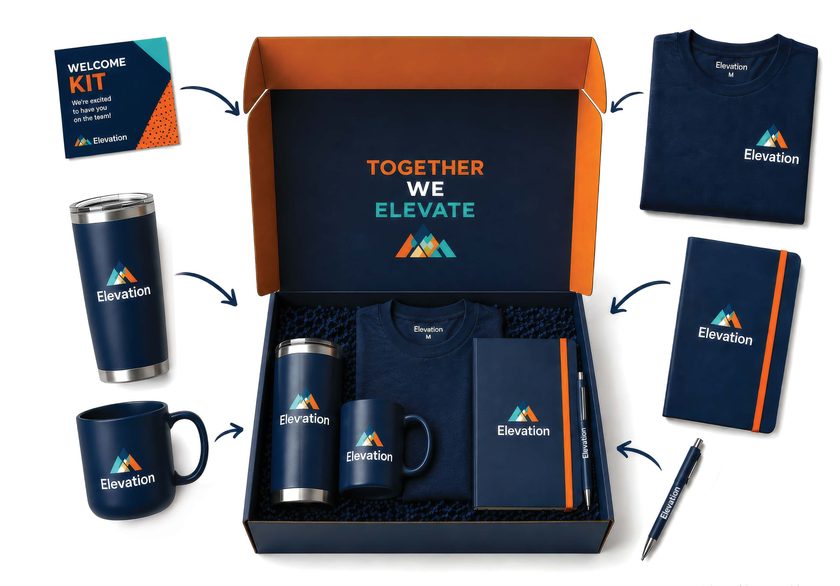
The vastness of the print and promotional products industries gives distributors an almost endless array of options to offer. Distributors are innately creative and enjoy the challenge of finding the perfect item. But what if the ideal solution is actually an assortment of products? That creates a new puzzle: bringing distinct products together in a way that feels cohesive and intentional. How can distributors pull it off? With kitting.
Bill Petrie, founder and creative director of marketing agency brandivate, explains in a course for the ASI Learning Network how kitting can not only provide product solutions for a customer, but also further ingratiate the distributor to that client and form a lasting business relationship.
“It’s our job to connect emotionally and form relationships that create differentiation,” Petrie says. “And one way we can do that is create a frictionless client experience as much as possible.”
Kitting accomplishes that goal by allowing the end-user to obtain products across multiple categories without dealing with several distributors and suppliers, juggling different shipping and decorating schedules or worrying about whether everything will arrive by the in-hands date.
That’s one differentiator. The other comes with the ability to get creative with a kit and go beyond simply putting items in a box. The packaging itself is an opportunity for a brand to make a powerful first impression before the packaging tape is even taken off.
Kits work for a variety of applications and end-user verticals. Just as you can fill them with practically any product a customer might want, so too can you employ kitting as a powerful offering to impress all manner of clients.
Broad Appeal
Branded kits aren’t a recent invention, but the COVID-19 pandemic did bring them to the forefront. Amid lockdowns and the shift to remote work, kits allowed sports franchises to connect with fans who missed being in the stadium, employers to engage workers who felt isolated from their teams and brands to thank customers shopping from afar.
Even after the pandemic-era restrictions subsided, end-buyers still value a kit’s ability to capture a brand’s aesthetic and message through different products that the end-user will use on a daily basis: drinkware, apparel, tech products, promotional hard goods, food and print products, among others.
“I don’t have many clients in the same industry,” says Mackenzie Cook, account manager for Karst (asi/239105). “What that has taught me is that any vertical finds kitting useful – especially for companies focused on employee experience, client relationships, events and distributed teams.”
Cook says that kits are often used across markets for employee onboarding to make a new team member instantly feel like part of the group. She also sees them commonly used for programs like employee recognition, sales kickoffs, company meetings, conferences, client appreciation programs, influencer marketing and self-promotion, new product launches and milestone gifting.
Keeping an eye on the calendar is helpful, too, because you can tie in seasonal themes or appeal to potential customers looking for different seasonal gifting ideas.
“We do a lot of new-hire kits, but mostly we do a lot for the holidays,” says Jordan Allan, customer service and inside sales for Brandit (asi/145139). “Our customers love showing appreciation for their employees.”
What’s in the Box
Once you have an idea of the where and the when, you need to start thinking about what the kit will look like. This is where you can put on your personal shopper hat and consider not only what products the end-user will want to use, but what the desired outcome will be from a branding standpoint. It isn’t always as simple as just putting a logo in front of them on five or six different products to keep it top of mind. There’s nuance in the branding of a kit that applies to each and every product involved, including the packaging on the outside.
Cook leads with the example of an employee onboarding campaign. “Products should help employees feel welcome and connected,” she says. “Apparel, bags, drinkware and useful workspace items can be especially effective.”
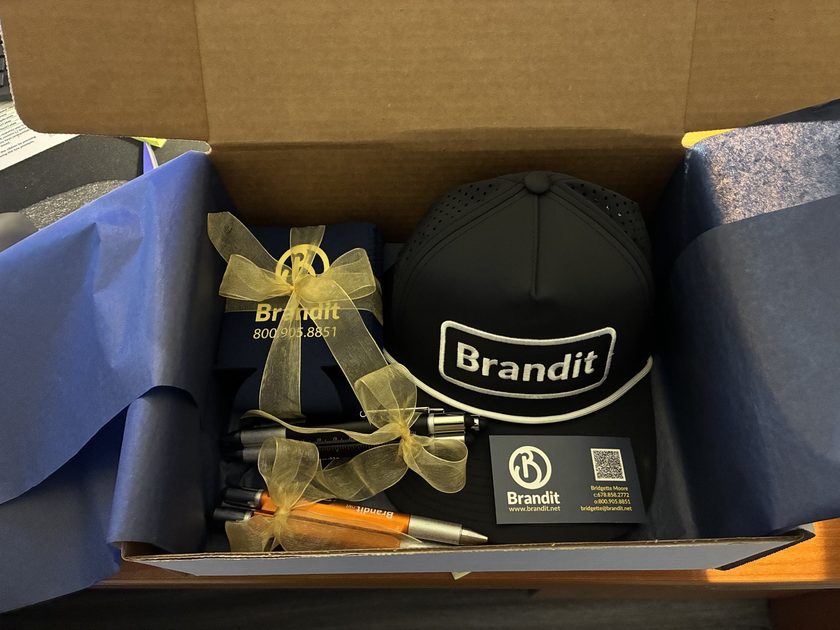
From the branding perspective, you can be a bit more overt with decoration. If these are items that are meant to be used in the workplace or represent their employer while they’re on the go, then it’s OK to prominently place logos. However, Cook warns that’s not always the case.
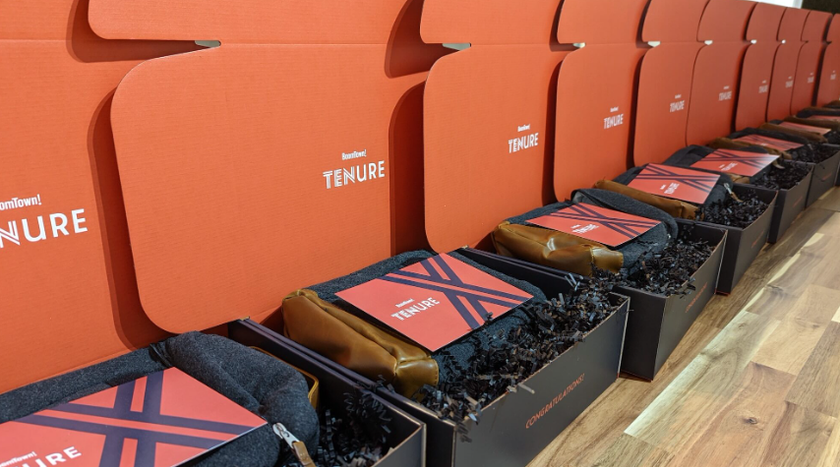
“A client thank-you is totally different,” she says. “Sending someone four or five heavily branded products may feel more promotional than appreciative. So, we might recommend one or two elevated pieces, subtle branding, retail-inspired, thoughtful packaging and a personal message.”
These two situations also call for different packaging on the outside. The employee onboarding kit is designed to inspire excitement immediately. An eye-catching logo and message on the outside can feel playful and make the recipient feel eager to embark on their new career. For a thank-you gift that’s meant to look elevated, it should be more minimal. Think about a luxury store – the logos aren’t in your face. Here, you can opt for more minimal designs.
“Context makes a huge difference,” Cook says. “What do we want them to feel or do next? That’s where I find it leads to much better product decisions.”
A distributor must also consider how the products inside the kit can travel – and how long they can afford to sit on a truck or on a shelf.
“Think about shipping versus personally distributing boxes,” says Bridget Resig, sales executive for Creative Resources. Resig gives an example of food promos, where expiration dates must be checked if a product is going to be stored for a while.
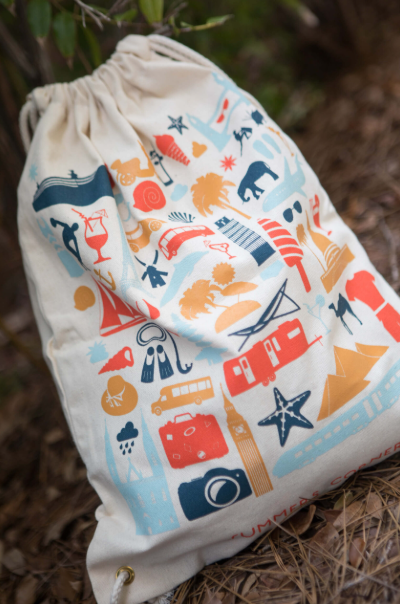
In terms of the packaging, the distributor isn’t limited to just a box, either. A kit can come in other containers, such as bags, and that’s something to think about when you’re envisioning the final delivery.
“One company might want a new-hire kit to arrive in a backpack for convenience and a way to include [the packaging itself as] an extra gift,” Allan says. “Another might think it doesn’t look as put together in a backpack and wants a custom box for all the items.”
This can be a puzzle for the distributor, but by asking the right questions and zeroing in on who the end-user is, how they’ll receive the kit and what the customer wants them to feel about the brand and do next, you can be confident the kit will be a hit.
Managing the Logistics
A kitting campaign isn’t simple. It doesn’t consist of one product, which means that you might be dealing with a variety of suppliers, and perhaps even decorators or printers. The reason that a good kitting campaign earns points with your customer is that you’re absorbing the work of going through different channels for products and delivering in one enticing bundle.
For distributors, that means staying organized and planning ahead. There’s no shortcut for this sort of thing, and procrastination or sloppiness will make your job much more difficult – and potentially ruin the relationship with the customer.
“We manage that by treating kitting as an operations project from the beginning, rather than waiting until all the products arrive to figure out how everything comes together,” Cook says.
Think of it this way: You don’t go out to buy lumber to build a tree house before you draw up the plans, right?
“We map lead times, decoration methods, quantities, inventory arrival dates, packaging dimensions, assembly requirements and shipping needs early in the process,” Cook adds. “We also build in contingency planning, because one delayed component can hold up an entire kit.”
Your supplier and decorator partners can be invaluable resources during this process, too. If you order all the products from one supplier, it may be able to assemble the kits for you if you don’t have the space or time.
“We do that when time and labor allow,” Allan says. “But, for really large projects, we’ve been lucky to find folks we can trust to kit it all for us.”
Regardless of your approach, the client or the products you include, the result should feel unified – accomplishing the intended goal and making the customer feel like it was as simple as buying one item off the shelf. That’s the magic trick of it all, says Cook.
Adds Cook: “The fact that the client doesn’t have to manage five suppliers, six tracking spreadsheets and 10 different timelines themselves gives them one clear, coordinated experience.”