
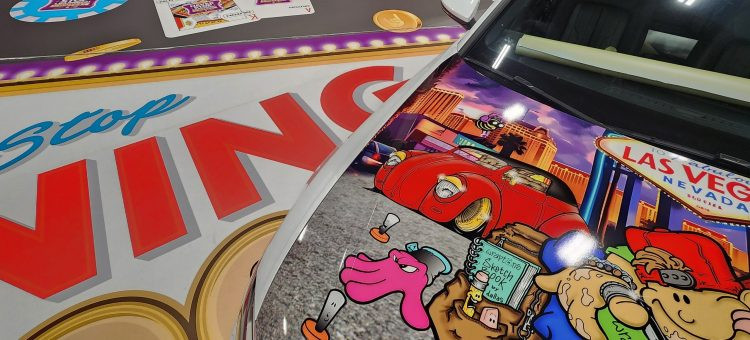
Pressure-sensitive laminates and media are a cornerstone of the printing industry. They are characterized by an adhesive that is activated by light pressure rather than heat, water, or solvents. Pressure-sensitive laminate (also known as cold laminate) is a protective film that adheres to surfaces via applied pressure and is ideal for use with heat-sensitive substrates. Pressure-sensitive media is a printable material that typically consists of three layers: the printable facestock, the adhesive, and then a backing paper or film that is removed from the adhesive when ready to install.
Although pressure-sensitive products have been in the market for decades, innovations driven by customer demand for variety, ease of use, and more sustainable options continue to offer improvements.
Sustainability
Traditionally, most pressure-sensitive media and laminates have been made of PVC (polyvinyl chloride), the world’s third most widely produced synthetic plastic. It is also widely considered to be the most environmentally damaging plastic because it is not biodegradable, is difficult to recycle, and can leach dangerous chemicals into the environment.
“In some geographies, local laws and regulations are pushing more and more customers toward sustainable solutions,” said Seth Bullock, product manager, Branding Graphics at Avery Dennison Graphics Solutions, a leading manufacturer of pressure-sensitive vinyl films and digital identification materials.
Read this full article on Wide-Format Impressions, a publication of PRINTING United Alliance, ASI’s strategic partner.