
Anyone in the print or promo industry understands the importance of branding and design. The product needs to tell a brand story. That includes tags and labels – the unsung heroes of a branded campaign.
But it’s not as simple as slapping a label or nondescript tag on a product. One needs to consider the item’s desired goal and how the branding fits into that. Just as branded packaging has become a key touchpoint in recent years, tags and labels can be thought about in the same way – the crucial first impression, but also what carries the brand messaging throughout the product’s lifespan.
In recent years, some printers and distributors have found that end-users want less overt branding to fit a more minimalist design aesthetic.
“We’re seeing more brands scale down their branding on products that live in the home,” says Jennifer Hoyt, director of marketing and e-commerce for Stouse (asi/89910), which was included on Print & Promo Marketing’s 2025 list of the Top Print Suppliers. “Labels with matte or soft-touch laminate on durable material give that clean, modern look without feeling too bold. Some brands also lean into tone-on-tone color schemes to keep things understated while still looking refined.”
Tags and labels offer a compelling mix of fun and function, and are a reliable source of sales.
Lindsay Bons, senior business development manager for IDLine (asi/59080), says designers and printers can walk that line of brand visibility without the logo overstaying its welcome. This can be done by working a logo into an unobtrusive spot (such as a corner), or incorporating it into a larger design or theme, so the message remains the focal point but the logo still has a place.
When using a hang tag rather than an adhesive label, too, you have more room to work with.
“The great thing about tags is that you can print on both sides,” Bons says. “What I’ve seen, and let’s use the holidays as an example, is that the front side of the tag would be a holiday theme and then the back, where you’d write your address block or message, you’d put your small logo. So now it’s still branded, but the main overall branding is the theme, and there’s still the logo on the back.”
With Pantone naming “Cloud Dance” (which is a fancy term for a neutral off-white shade) its 2026 Color of the Year, it highlights how consumers are looking for minimal design that can fit any aesthetic. Think of it like a universal donor.
Tags and labels can be used in the same exact way. And the beauty of them within promo is that they have applications across just about any campaign you can imagine.
Where They Fit
Hoyt says that Stouse’s tags and labels have been used for a wide variety of applications.
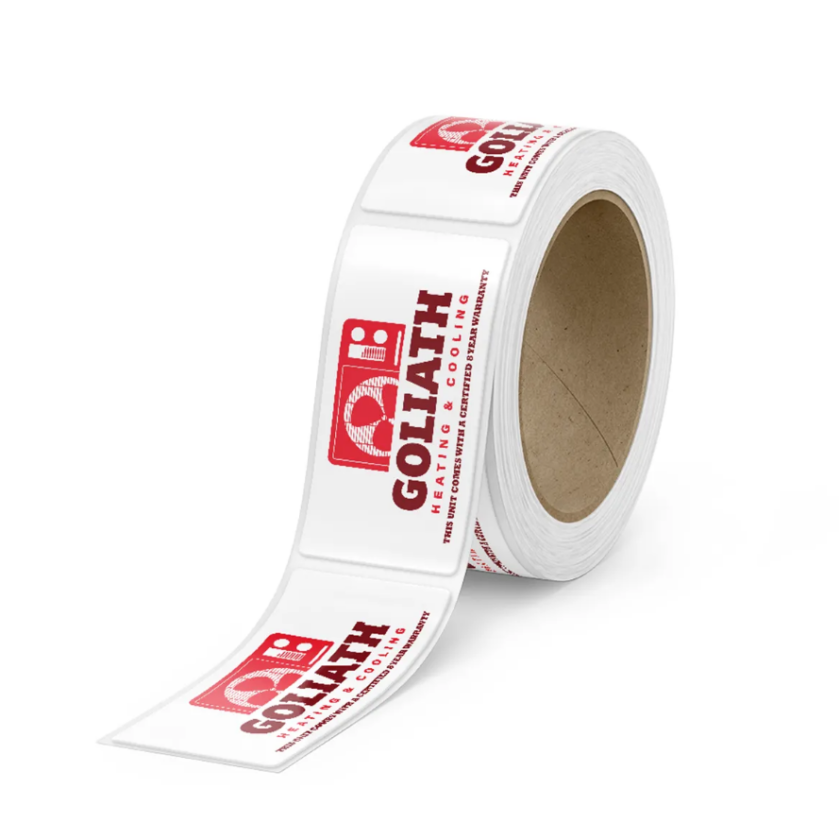
“Because they stick to so many surfaces – paper, plastic, metal and different types of packaging – they’re a simple way to bring a campaign together across a mix of products,” she says. “We see labels used on everything from apparel kits and onboarding boxes to event giveaways and bundled sets. They add a nice, branded touch to drinkware, notebooks and packaging where traditional imprinting may not work. Some customers even use a label in place of a hang tag as an economical way to elevate the presentation.”
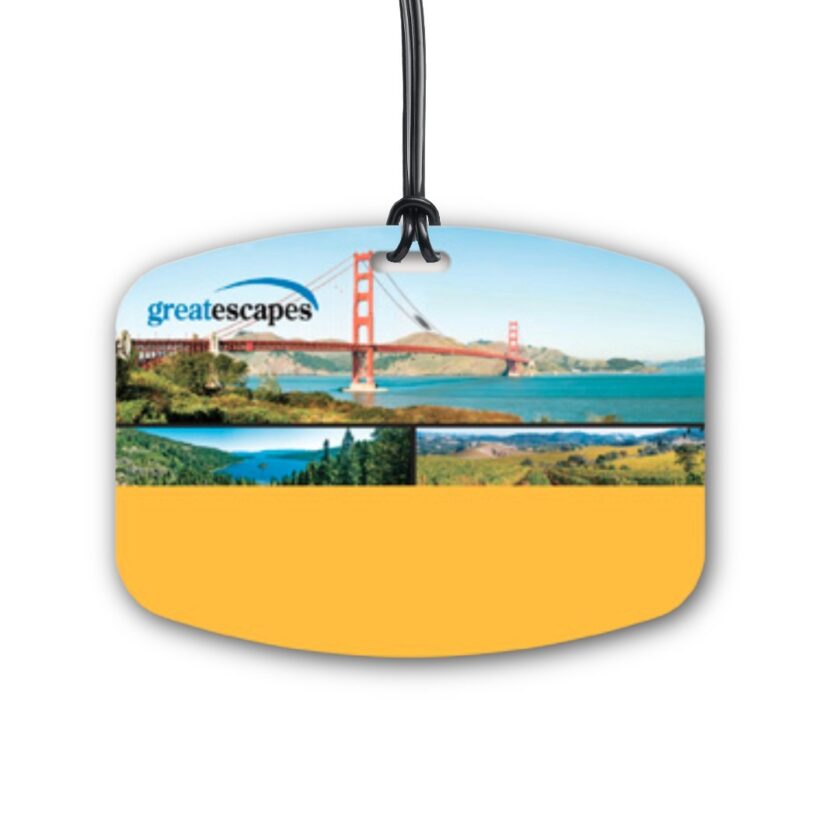
A tag can be a chameleon. Not only can it fit into a greater design theme, but it can change its shape to fit the application. End-users know this, and they want something beyond the cookie-cutter rectangles or squares.
“In tags,” Bons says, “the standard rectangle has always been popular, but I’ve been seeing more and more custom shapes. For example, we could do tags in the shape of a golf bag for a tournament, and that’s something different and unique when it shows up on a golf bag or backpack.”
Bons also notes that for tags that go on luggage or other belongings, people are asking more for fully custom-printed pieces rather than just address blocks where people fill in their own information.
The Bare Necessities
With labels and tags, it’s not just about being a fun branding touch. For printers or promotional products distributors looking to include print in their campaigns, tags and labels represent a reliable product category thanks not only to their usefulness and ability for creativity, but their ubiquity across a variety of necessary and popular customer verticals such as healthcare or manufacturing.
“Tags and labels represent a tremendous opportunity for distributors to add value across their entire product portfolio,” says Will Prettyman, general manager for the Anderson, SC-based label plant for Wise. “For hard goods and apparel, custom hang tags transform basic items into branded experiences, telling brand stories, including QR codes linking to digital content or featuring personalized messages for special events.”
While QR codes aren’t cutting-edge technology, they really took off during the pandemic when restaurants suddenly needed to limit touch points on paper menus. And thus, suddenly, everyone understood how QR codes worked a lot better than they previously might have.
Instances like this, where a label has a function beyond simply marketing, is where Prettyman believes a distributor can really find the opportunity to cross sell to its customers who might already be buying promo or apparel. And even as the world shifts toward digital in many areas, safety labels and critical messaging aren’t going anywhere.
“Safety and compliance labeling represents a massive market segment,” he says. “Manufacturers of chemical products, industrial equipment, power tools and automotive parts require GHS-compliant labels, warning labels and instructional labels that must remain legible and adhered throughout the product’s entire lifecycle. These customers include chemical companies, equipment manufacturers, automotive suppliers and warehouse operations.”
The same goes for the healthcare and pharmaceutical world, where barcoded labels are used for inventory tracking, patient safety labels, prescriptions and equipment identification.
Prettyman also names verticals such as horticulture and agriculture, which require weather-resistant tags and labels for plant identification or tags for lumber yards; as well as the logistics and shipping industries for informational labeling to keep track of so many moving pieces.
“What unites all these end-buyers is the need for reliability,” he says. “A faded safety warning or unreadable barcode isn’t just inconvenient. It creates liability, safety risks and operational failures.”
He adds that even when the clear goal is safety and compliance, there’s still room for aesthetic considerations.
“One of the ways we see brands approaching this challenge is using clear labels that create a ‘no-label’ look,” he says. “Brands are also designing in what we might call ‘functional transparency,’ or using the label’s back or peel-and-reveal designs for detailed product information, while keeping the front clean and uncluttered. This gives brands the best of both worlds: visible identity on the front and comprehensive information where users look for it.”
Somewhere In Between
It’s here where distributors and printers need to manage both sides of the process – the creative and the scientific. Selecting the right design, shape and adhesive is just as important when the goal is easily catching an eye as it is to tastefully fit into a larger picture.
And, sometimes, the chance presents itself to take something utilitarian and “boring” and make it sing a little bit. This can extend the brand visibility with the tag, and it doesn’t require keeping the tags or stickers on your new product like that guy you went to high school with who refused to take the stickers off of his hat.
“Several brands order hang-tag styles using our durable decal materials like vinyl, holographic or brushed chrome, and design kiss-cut areas with their branding on the sticker side and print the point-of-sale information on the liner side,” Hoyt says. “This makes an ordinary hang tag a fun giveaway item promoting the brand that will live on long after it’s removed from the original product.”
Getting Started in Healthcare Labels
The healthcare vertical is one of the most reliable for distributors and printers selling labels. Hospitals and other healthcare providers need print labels for patient identification, specimen integrity, device compliance, inventory, medical safety, sterilization workflows and more.
There are also special concerns for labels used in the healthcare world that distributors selling into other verticals like retail need to consider. For example, some labels require adhesiveness at sub-zero temperatures. Others need to prevent or detect tampering. Will Prettyman, general manager for Wise, lays out a list of specific cases in healthcare where labels can provide solutions.
Cryogenic environments: -80°C freezers need cryo adhesives that can be applied to pre-frozen vials and resist frost/freeze-thaw.
- Sterilization: Steam autoclave applications need face stocks/adhesives rated for extreme heat and moisture.
- Chemical resistance: The ribbons and face stocks for these labels must resist the harshest solvents: IPA, bleach, quats, and xylene (histology).
- Low-surface-energy plastics (PP/PE) need LSE adhesives: Resellers’ bag of tricks should include removable adhesives for reusable assets and permanent adhesives for disposables and chain-of-custody demands.
- Tamper-evident: Pharmacies require void polyester, destructible vinyl and cap/neck-band seals.
- Human contact: Wristbands and skin-contact labels should be latex-free and use skin-safe materials.
- Antimicrobial coatings: Useful for inhibiting microbial growth on the label surface.
Prettyman also instructs distributors and printers on how they can get started selling labels to the healthcare market.
- Learn the lingo: Start by familiarizing yourself with the basics of healthcare labeling requirements. Understand terms like GHS compliance, FDA regulations and HIPAA considerations for labels containing patient information.
- Partner with the right vendor: Choose a label manufacturer that specializes in healthcare labels and understands adhesive chemistry, material durability and regulatory requirements.
- Target the right prospects, both large and small. Think hospital systems, urgent care centers, local pharmacies, dental offices and medical device manufacturers. Smaller healthcare businesses are often underserved and more accessible than larger ones.
- Lead with solutions, not products: Don’t just sell labels – solve problems. Can you help a pharmacy reduce medication errors? Assist a clinic with patient tracking? Help a laboratory maintain specimen integrity?
- Offer samples and testing: Healthcare clients need to verify that labels work in their specific environments. Be prepared to provide samples and support testing protocols.