
Key Takeaways
• Paper business forms remain essential for many small and mid-sized businesses.
• Although demand for business forms has declined overall, distributors can earn strong repeat business and high margin
• Success in the business forms market comes from targeting the right operational decision-makers, focusing on niche verticals with ongoing paper-based processes, and leveraging reliable service to capture long-term customers.
The idea of a “paper trail” is still important. No, not as something that criminals avoid leaving, but something that maintains an official record for businesses and the many moving parts they need to keep track of.
“For food service, for example, I’d say there’s just the fact that a lot of these invoices go out on a truck as two- or three-part forms and need to be signed as a delivery receipt,” says Tom Warnez, CEO of Metcom Inc. (asi/268852). “All of the food has to be delivered to restaurants, institutions and markets, so there’s always a delivery receipt.”
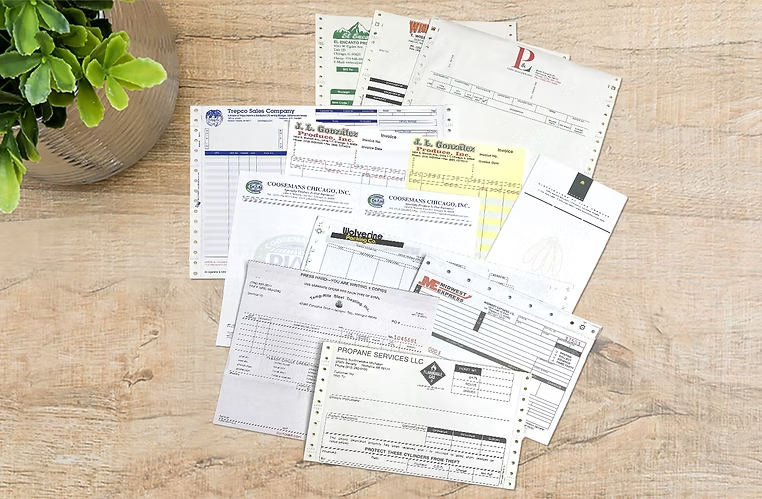
“Business forms” is a term that covers a lot of different products. It can mean receipts, invoices, checks or any other paper form that’s used for a business’s regular tasks. This means that there are many customer verticals and potential end-buyers for business form products.
Warnez also cites local governments and judicial systems, specifically district courts, as places where paper forms are still widely used as opposed to strictly digital records.
More than anything, though, Warnez says that paper business forms are mostly used by smaller regional or local firms. It’s often the larger national or international organizations that have the budget for more robust digital platforms and recordkeeping. They’re often privately owned, too, meaning there’s someone at the top making the decision to continue using paper forms.
Or, more accurately, not making the decision to go digital.
“It makes them more reluctant to change,” he says. “That doesn’t mean they’re not changing. … They’re just sticking it out a lot longer, and some of them with pretty big volumes actually.”
Business Forms as a Value-Add
Warnez admits that his firm’s business form sales have gone down over the years as the world has become more digital. He’s very matter-of-fact about it.
“At one time, back in the ‘80s, it was 100% of our business,” he says. “Now it’s maybe 18%.”
That’s not to say that business forms have no place in a distributor’s approach, but they’re often no longer the star of the show. They still have a role to play, however.
“Over the years, we have found that selling business forms is most successful when we approach them not as standalone commodities, but as essential workflow tools that solve real operational problems for clients,” says Joe Falcone, chief operating officer for PPM Top Print Distributor and Counselor Top 40 distributor The Sourcing Group (asi/330100). “Ultimately, the key has been showing clients that forms aren’t just paperwork – they’re tools that support accuracy, customer experience and operational flow.”
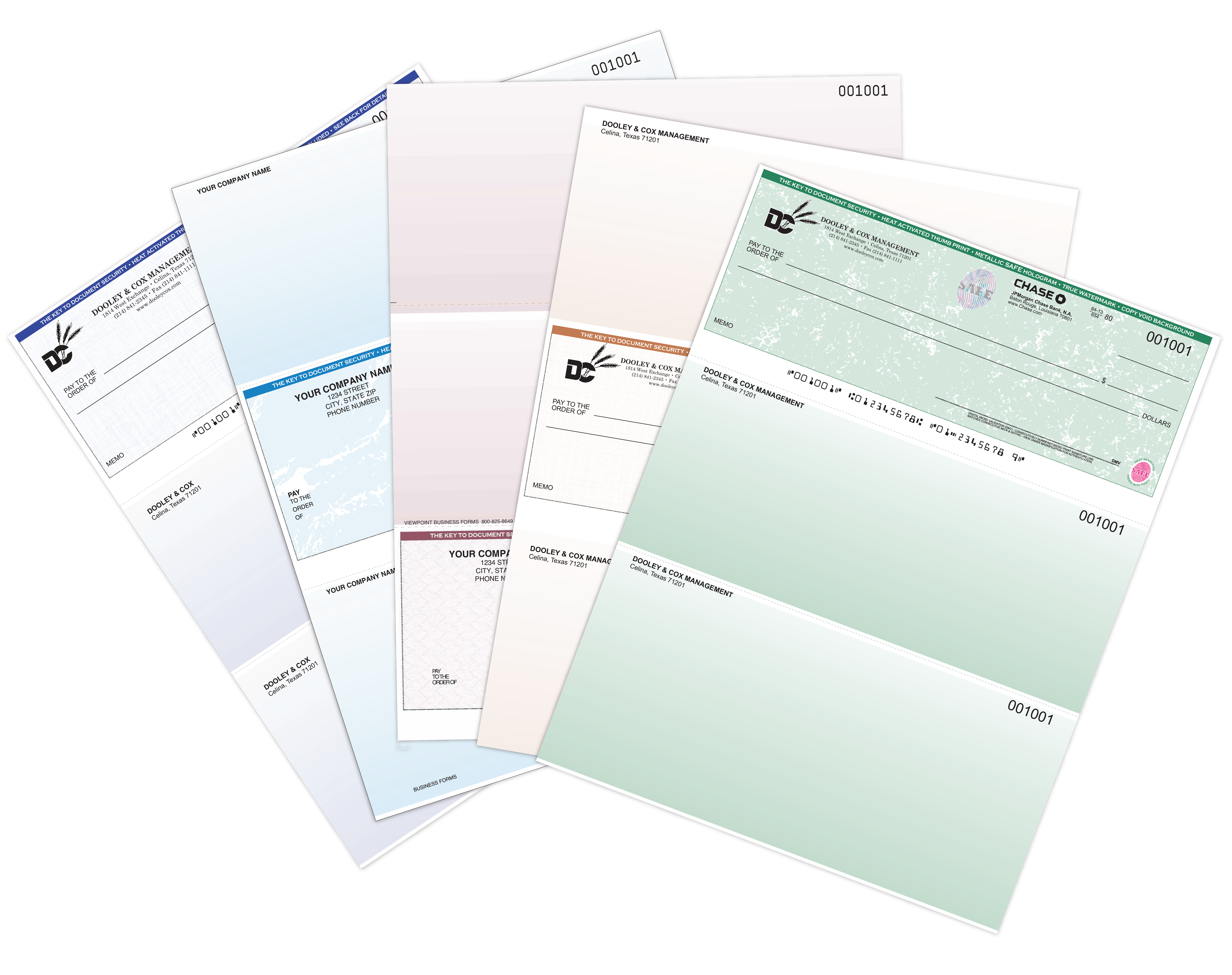
Brett Gillis, general manager for CFC Print & Mail, estimates that business form products like checks make up as much as 60% to 65% of his business.
“We do a lot of envelopes and snap-outs like driver’s logs and books, statements, invoices and some run-of-the-mill forms,” he says. “Anything that small businesses typically will use in a day-to-day business.”
Remaining Competitive
Gillis says that CFC Print & Mail has managed to keep its business form sales consistent, or even growing, not by making any major decisions from a business standpoint, but by being a quality distributor ready to accept new business when one of the remaining brokers drops the ball.
“Some blunders from competition, you could say, have significantly changed people’s mindset of said customers or distributors,” he says. “So they’ve looked elsewhere and found us, because we could do it better and faster than a lot of people.”
These instances have allowed CFC Print & Mail to find new business for print sales, which can be hard to come by.
Warnez offers something similar, saying that a distributor or printer that remains in the game will have less competition and, thus, ability to achieve high margins on orders.
“They warned us to diversify and get out of that business,” Warnez says. “But I think what they forgot – or maybe didn’t know – was that the last ones standing would be gaining 60%-plus margins on repeat orders.”
He adds that even with minimal self-promotion or cold calling, there are plenty of end-buyers in need of these products. If you’ve built a reputation as a reliable vendor of business forms or other print products, chances are good you’ll get a call asking about an order.
Otherwise, business form products can be a value-add for existing customers and create regular repeat orders, especially for businesses that use them at a steady pace like shipping invoices or receipts, which need to be replenished often. Gillis mentions automotive and education as verticals, too, where a distributor can incorporate print products into a larger print or print and promo order.
If a customer needs things like checks, they likely need other business form products. Or, if they’re ordering promo, they might also be in the market for print and want to go to one source for them.
“We’re known for checks and envelopes, but we’re able to provide in other areas because we can print a lot of different things in-house,” Gillis says. “We’re able to offer one thing, and then as soon as we get that, we can say, ‘Well, here’s what else I do, and I do this just as well as I do the checks.’ You’re able to have a broader reach to the end-user if you can provide all of those things to one person.”
Warnez says that distributors and printers might just need to change their sales approach, and instead of speaking with the marketing department, speak with the people who are handling the forms every day.
“See who the office manager is or the shipping people are, because you’re probably already selling them something,” Warnez says. “You might as well ask, because the business is easy, and once you have it, it’s very unlikely you’ll lose it.”
The dilemma, he says, is that even with steady sales, business forms are no longer something you can hang your entire firm’s hat on.
“You don’t want that to be your only strategic plan,” he says. “We went from 100% to 18%, and we’re actively selling it. It’s important to look for applications. Make sure they’re invoicing using continuous forms because that’s the number-one profit area. There’s lots of margin in that, since there’s hardly anybody left doing it. Look to see what they’re billing. Then there’s other stuff in the shipping department. Sometimes they’ll use shippers, slips, tickets or receipts.”
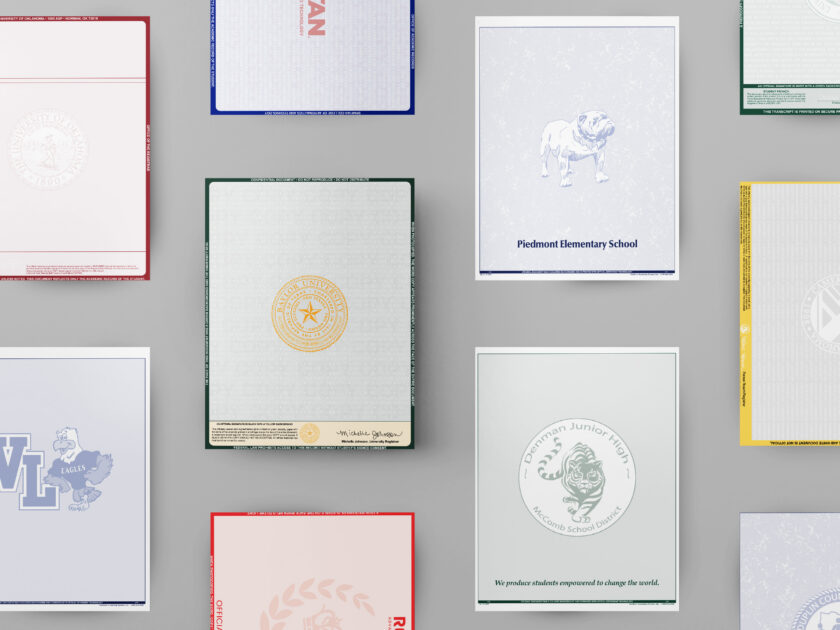
Business form sales require a bit of strategy and a specific approach rather than casting a wide net with a sample of products that have a one-size-fits-most appeal.
Verticals like industrial and manufacturing, food service, education and retail are all still primed for business form sales.
“It’ll be small-dollar volume, but it’ll repeat,” Warnez says. “It’s like an insurance premium. It just keeps going and going. If you get a lot of those, all of a sudden you’ve got a chunk of business.”