
For those interested in growing via convergence into the packaging and labels market — or for those already in that segment — read on for insights into what to expect in 2026.
Sustainability Reigns Supreme
For Ryan Bennett, product manager at Minneapolis-based Meyers, a PRINTING United Alliance member company, sustainability is something customers are looking for.
“It used to be, you stood out if you were a sustainability leader, but now it’s kind of the starting point,” Bennett says. “You have to start there and then innovate.”
Meyers has lived up to this by using 100% carbon-free electricity, installing solar panels, committing to a “zero landfill” strategy to divert waste away from landfills, and using eco-friendly products like recycled paperboard and water-based glues, inks, and coatings.
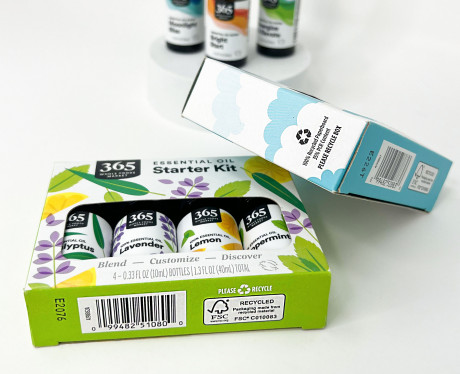
Bennett says the brands turning to sustainable packaging options most are in the health, beauty, life sciences, and food markets; these brands have increasingly moved toward paperboard and packaging made from recycled materials.
However, data from the “Digital Packaging: Maximizing Innovation and Impact” report from Alliance Insights, PRINTING United Alliance’s research arm, show that recyclability of a package is only part of the sustainability puzzle for brand owners. In 2024, 60% of brands ranked recyclability as their top packaging sustainability demand; in 2025, that percentage dropped to 42%.
The other sustainability attributes taking priority include lightweighting and rightsizing — which are on 37% of brand owners’ radars — followed by reusability (34%) and reduction of packaging material waste (30%).
What’s driving brands’ need for sustainable packaging solutions? Cory Francer, analyst at Alliance Insights, says the push is often coming from external sources.
“I think that’s because they’re feeling a lot of pressure, not just from their customers being consumers that want recyclability, but that want to feel like they are supporting a sustainable product, sustainable package,” Francer says. “There’s also now all of this legislative and regulatory stuff that they have to contend with. We’re seeing EPR laws passed in seven states now, and 12 have it on the table.”
And while sustainability demands are certainly on the rise, Clayton Stormer, national sales manager at Dallas-based Abbott Label, says there’s one thing that’s giving interested brands pause.
“Some of these larger brands — it sounds really good out of the gate, but when you finally start talking cents and dollars, it almost leads them to go back to [substrates and materials] they’ve been using in the past,” Stormer says.
Read the rest of this story on Printing Impressions, a publication of PRINTING United Alliance, ASI’s strategic partner.