
Key Takeaways
• Wide-format printing creates large-scale signage, displays and immersive experiences.
• Five primary ink technologies offer different benefits for durability, substrates and applications.
• Digital wide-format printing enables greater customization and personalization.
From the name, wide-format sounds pretty self-explanatory. It’s large-format signage and graphics – think wall murals, window graphics, rigid signage, banners and even vehicle wraps.
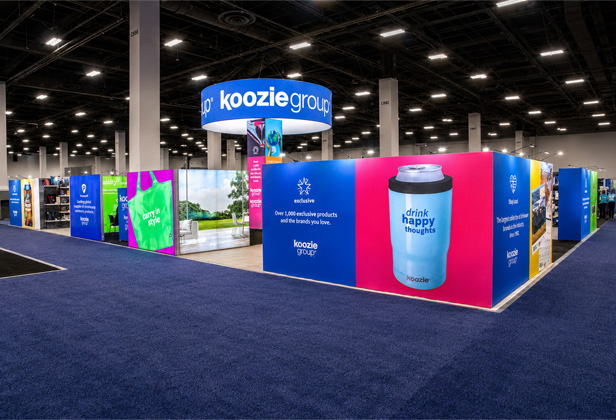
Wide-format digital printing involves the inkjet printers everyone is familiar with, but on a grander scale, says Dan Marx, content director of Wide-format Impressions, a publication of ASI’s strategic content partner PRINTING United Alliance. Wide-format printers generally refer to equipment that can print 36 inches or wider – and can go as wide as 15 to 16 feet, he adds.
But wide-format printing is about more than graphics; it also helps create experiences to be remembered. It can be used for retail campaigns, to make booths stand out at trade shows and for events like the Super Bowl, the FIFA World Cup or the Olympics.
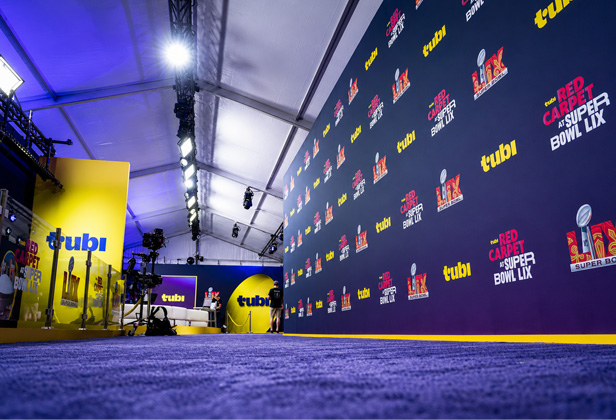
As opposed to traditional book printing, where the purpose is to get words on a page, wide-format printing is about making physical objects – like signs, displays or museum exhibits, Marx says. “They’re taking the visual medium of printing and transferring it into items,” he adds.
Even though wide-format graphics are hard to miss, sometimes their impact is truly underestimated.
How Wide-Format Printing Works
Wide-format printers use advanced inkjet technology to apply ink directly onto a wide range of substrates, including vinyl, fabric, canvas, corrugated materials and specialty films. Marx breaks it down to five essential inks to know:
1. Aqueous Ink: This is a water-based ink technology meant for more short-term applications and isn’t designed to withstand the outdoors. It’s similar to the type of printing a person would do at home. “Obviously, it can look beautiful, but if you take it out in the rain, you’re going to have a problem,” Marx says.
2. Eco-Solvent Ink: These inks have a solvent within the formulation that allows them to sort of bite into the surface. They’re often used for printing onto vinyl materials because they eat into the surface and become enmeshed in them, Marx says. “The advantage of that is higher durability,” he adds, noting that this technology is often the go-to for outdoor graphics, vehicle graphics and similar items.
3. Latex Ink: Latex ink is a water-based, heat-fusing digital printing ink made of water, color pigments and synthetic latex polymers. Its stretchability makes it optimal for applications like vehicle wraps. “Latex, for a lot of companies, has been a replacement of kind of solvent-based technology because it offers a lot of the same capabilities with some advantages. It dries very quickly. So, people can move from printing production into finishing very rapidly,” Marx says.

4. UV Ink: According to Marx, this is the most widely used ink thanks to its durability and ability to adhere to a lot of different substrates and surfaces. “It can adhere to many things, whether on its own or with an adhesion binder or a primer to help it stick, for instance, to glass,” Marx says.
5. Dye-Sublimation Ink: Dye sublimation is a process where the ink turns into a gas and then “literally infuses into the surface of the substrate,” creating a permanent bond, according to Marx. It’s effective with synthetic fabrics and generally doesn’t work with 100% cotton substrates. It’s used extensively for soft signage, flags and fabric banners. “You see a boatload of that in events, and in things like wall displays in airports,” Marx adds.
Digital Print Is Taking Customization to New Heights
Even though digital print isn’t particularly new, Marx explains that it has opened doors in wide-format that weren’t possible a decade or so ago. Thanks to digital print, the ability to produce unique prints without creating new plates has expanded opportunities for personalized products and higher-value applications.
Digital print isn’t as fast as its analog cohorts, but what digital lacks in speed, it makes up for in other areas. “Screen printing is very fast when you’re doing many copies of the same print,” Marx says. But, with digital printing, you’re not looking at making 200,000 identical objects, he adds. Instead, the technology allows for the kind of customization and personalization that’s prized in the promotional products space in particular.
“Digital is taking us into new and interesting places,” Marx says, “and I think that’s where people should live and think.”
Overall, wide-format printing has come a long way from simply producing oversized graphics. Today, it powers immersive brand experiences, transforms everyday spaces and enables a level of customization that was once impossible.
Whether it’s a vibrant retail display, a wrapped vehicle, a fabric backdrop or a personalized promotional product, wide-format continues to push the boundaries of what’s possible with print. As digital technology and ink innovations continue to evolve, one thing is clear: The future of wide-format isn’t just bigger – it’s smarter, more versatile and more impactful than ever.