
Key Takeaways
• The Proof Over Promises forum brought about 40 promo professionals together to develop shared approaches to climate risk and sustainability reporting.
• Organizers say the summit is only a starting point, with the steering committee now working to turn the group’s ideas into specific industry guidance.
There are many companies in the promotional products industry committed to sustainability and reducing their carbon impact. What’s been missing, though, has been an organized effort to coordinate around a common language and shared objectives.
Proof Over Promises, a climate impact forum held over three days in Winter Park, CO, was an attempt to begin that process.
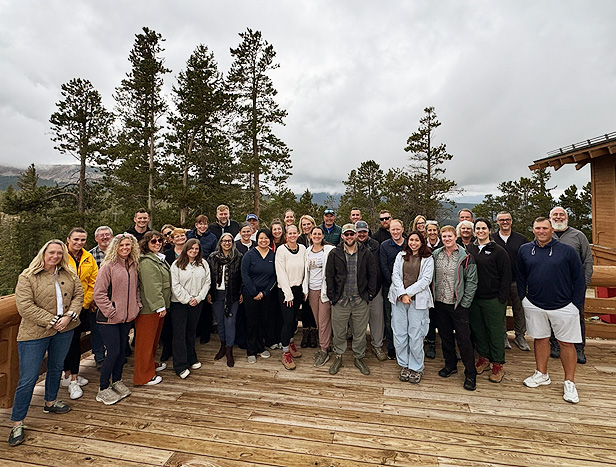
“We brought together sustainability leaders, compliance specialists and brand executives for a working summit, not a panel event,” said event organizer Mike Smith, co-founder and CEO of Aclymate, a sustainability management and carbon accounting platform designed to help small and midsize businesses measure, reduce and report their carbon emissions. “This event proved that a group of competitors and peers can sit down, do real work together and walk away with shared, credible commitments, rather than more talk.”
The promo industry – reliant on long supply chains, tight deadlines and factories concentrated in a few regions – is already feeling the effects of climate instability, said Nick McCulloch, senior director of sustainability and compliance at Counselor Top 40 supplier PCNA (asi/66887) and a member of the steering committee that helped shape the summit.
“That model relies on a stable climate. Heat, flooding and water stress are already putting it under strain,” he added. “The question isn’t whether climate hits our business. It’s how well-prepared we are for impacts that are already here.”
But that same business model also puts promo in a unique position to band together and make substantive changes, sustainability leaders say. To that end, the summit’s roughly 40 attendees – from Counselor Top 40 firms to much smaller companies – were broken up into five working groups, developing concrete proposals to help affect positive change. Suggestions included creating uniform sustainability data requests for suppliers and creating a buying group to help smaller firms shoulder the costs associated with things like carbon accounting.
A key refrain during the summit was the importance of collaboration and sharing best practices.
“People across promo want to do something about climate, and many of us face similar risks,” McCulloch said. “The forum was a chance to learn from each other: how others are approaching the problem, what’s working and what’s coming. Every company makes its own decisions, but no one has to figure this out from scratch.”
Indeed, no single company is equipped to solve the complex challenges surrounding climate risk and environmental impact on their own, said Laura Smith, who oversees sustainability and compliance at supplier Storm Creek (asi/89879) and also sat on the Proof Over Promises steering committee. It requires an industry-wide commitment to work through them.
“We didn’t just talk about change,” Smith added. “We started building the road map the promo industry needs to make it happen, together.”
Attendees left the summit energized, engaged and ready to build on the conversation. Julie Schneiderman, founder and CEO of supplier EcoStiks, was thrilled that “every voice has a place in the room.”
She added: “No matter the size of our companies or the roles we hold, we all have something valuable to contribute, and real progress for climate change will take all of us.”
Victoria Sierra, compliance manager of Counselor Top 40 supplier Koozie Group (asi/40480), said she was astounded by what the diverse group of promo leaders was able to accomplish over just around 48 hours, but cautioned that it’s just the start, not an endpoint. “To truly see the changes we’re advocating for, we need to continue working together, and we need to be open to new ideas,” she added.
Members of the Proof Over Promises steering committee said they’re currently distilling the ideas that came out of the forum and working toward turning them into specific guidance for the industry.
“Our goal is to build shared capacity,” McCulloch said. “Our value chains overlap, and so does our carbon: One company’s supplier emissions are another company’s operations.”
Rather than waiting for new regulations or incentives, he added, the impetus has to come from within the industry itself. “We want to help lead that,” he said.