
What was shaping up to be a stable year for packaging and label converters has quickly shifted. Around this time last year, Mike Murton says that many of OMNI Systems’ customers were mapping out their plans — and based on those outlooks, the Mayfield Village, Ohio-based label converter’s president and CCO expected a year of modest, steady growth.
“There was stability in supply coming from the raw material suppliers, weren’t any major conflicts going on in the world that hadn’t already been going on there,” he says, noting that OMNI could use this stability as an opportunity to pass some savings to customers, or to try to bring in new customers.
But then the conflict in Iran began.
“What we thought was going to be a year of price stability is now a year of pretty aggressive cost pressures coming into the market that we’re working to navigate not only with our suppliers, but also with our customers,” Murton says.
What’s Happening in Iran
On Feb. 28, the United States and Israel launched a joint airstrike on Iran. As wars are typically unpredictable, there has been little clarity about what the end of this one will look like.
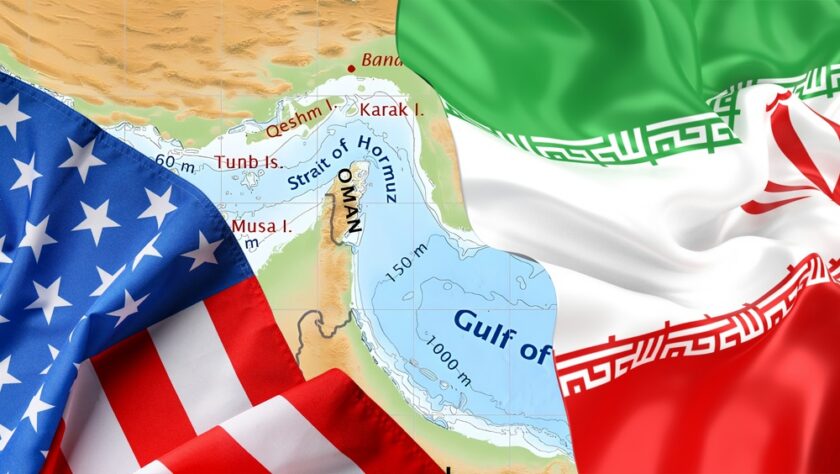
One of the major focal points of the conflict has been the closure of the Strait of Hormuz. In 2025, the strait saw an average of 20 million barrels of crude oil and oil products pass through it each day — comprising roughly 25% of the world’s seaborne oil.
Because of the closure, shipping traffic has decreased significantly. In a typical month, about 3,000 ships pass through the strait, which measures 24 miles at its narrowest point. But recent data shows that only 54 vessels traversed the strait in the entirety of March — a decrease of 98.2%.
Impact on the Supply Chain
These conditions have caused oil prices to jump — something printers and converters need to keep a close eye on.
“The price of fuel affects everything, right?” says Dave Taylor, CEO of TAVO Packaging, a folding carton converter in Fairless Hills, Pennsylvania. “… [The U.S. is] the largest oil producer in the world, so it impacts us less, but I think it has a great effect on people in other parts of the world, which in turn makes the stuff we buy more expensive.”
The rising cost of oil is also tied to the cost of gas, which in turn increases transportation costs. As Andy Paparozzi, chief economist at PRINTING United Alliance, notes, everything from equipment to inks gets delivered by diesel-powered trucks.
Read this full article on Packaging Impressions, a publication of PRINTING United Alliance, ASI’s strategic partner.