
Key Takeaways
• Cooks Who Feed (asi/46526) provides safe paid employment to women in India while producing sustainable kitchen linens for retail and corporate gifting.
• Every purchase supports hunger relief, with the supplier donating more than 2 million meals through partnerships with No Kid Hungry and Second Harvest.
• The B Corp-certified company has also raised awareness through collaborations with celebrity chefs.
On a trip to India 10 years ago, Seema Sanghavi visited an organization that was teaching underprivileged women how to sew, with the hope that they would be able to find safe paid work.
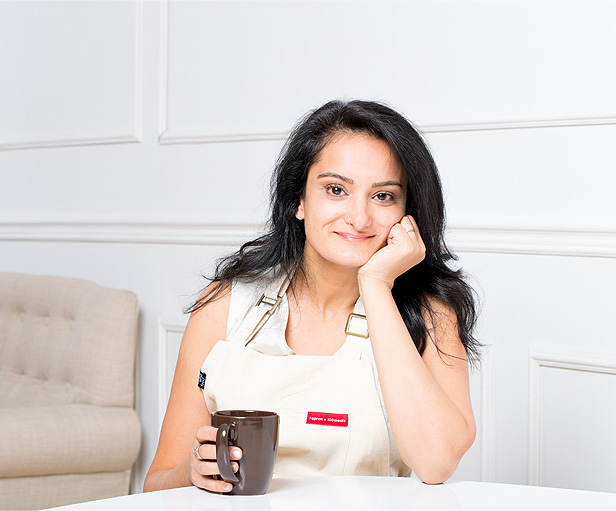
Sanghavi left inspired by the organization’s impact, but learned that even with the organization’s help, the women still often struggled to find work because many women in India already knew how to sew by hand.
That’s why, in 2019, she created Welland, ON-based Cooks Who Feed (asi/46526), a supplier that offers sustainably made kitchen linens while committing to donating meals for every item purchased. The supplier uses locally sourced, recycled and organic fabrics to produce its chef aprons, tea towels and other products.
“When I launched Cooks Who Feed, I actually worked with that same NGO in the beginning to create all of our products,” Sanghavi says. “There’s no shortage of women needing work.”
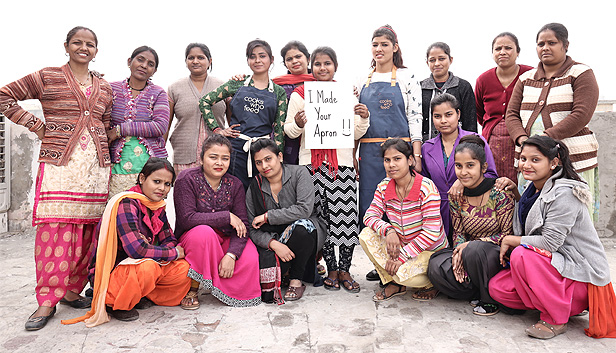
Now, Sanghavi runs her own production company, employing 32 women in India.
Cooks Who Feed initially started as a retail company selling aprons. Sanghavi founded the company to help the women find work, but also because she noticed that kitchen linen production hadn’t really caught on to the sustainability wave (for example, a lot of chefs were wearing virgin polyester).
A few months after the company was launched, real estate agents started reaching out to Sanghavi, wanting to customize the aprons to use as a housewarming gift. Then COVID hit, which Sanghavi says was difficult to navigate, but she added that with different developments like tariffs, there really isn’t a perfect time to start a business.
Once the hospitality industry was back after the pandemic, Sanghavi scored her first U.S. based client: Celebrity Cruises. Her company produced culinary aprons for their onboard culinary classes.
One unique aspect of Sanghavi’s business is its giveback program. For every product purchased, Cooks Who Feed works with No Kid Hungry in the U.S. and Second Harvest in Canada to donate meals. For every product purchased on the company’s retail line, 100 meals are donated. For corporate gifting purchases, a minimum of 10 meals is donated per product.
“People like the feeling when they get something that they know is a quality product and is impactful,” Sanghavi says. “That is a reflection on the organization and the person who gave you the product too.”
As of early this year, Cooks Who Feed has donated over 2 million meals, Sanghavi says.
One of the challenges for Sanghavi early on was credibility. It was important to her that customers knew she was doing what she said she was: using sustainable textiles and donating meals. That’s why Sanghavi pursued B-Corp certification, which the company earned in March 2025. The process involved collecting financials and receipts from the early days of the organization, which took about a year.
“It’s a strenuous process, but I think it was well worth it,” Sanghavi says.
Another way Sanghavi built credibility is through celebrity partnerships. The company’s retail line currently offers five aprons named after and promoted by celebrity chefs such as Amanda Freitag, who is involved in Food Network, and Brooke Williamson, who won season 14 of “Top Chef.”
The first American chef the company partnered with was Art Smith, who was Oprah Winfrey’s personal chef for many years.
Sanghavi started the company with only her own savings, so she didn’t have a lot of money to spend on marketing.
“I thought, maybe it makes sense to try to see if we can collaborate with chefs, people who actually love having a good apron,” Sanghavi says. “I really tried to focus on chefs that I knew were doing work with their local food banks.”
She reached out to chefs via Instagram or showed up to events she knew they would be attending. Most of the time it was an easy sell, she says, because the chefs cared about sustainable production and food insecurity.
Those same beliefs, she says, are held by many of her customers. And Sanghavi believes that’s where the world is going: Consumers are becoming smarter, and they want to spend on quality products. And companies do too, which is why her kitchen linens are used for corporate gifting.
“If you’re running a company, you should be able to do it without causing harm,” Sanghavi says. “At the end of the day, you want to support a company that’s just not hurting the community or hurting people or the planet.”