
When a design fails on an embroidery machine, the knee-jerk reaction in this industry is to blame the digitizing. Then the needle. Then the tension. Then the bobbin — everything except the part that actually broke.
After 30-plus years of pulling puckered, bald, and warped garments off machines for a living, I can tell you the file is rarely the only guilty party. A digitizing disaster is almost always the last visible symptom of a decision made three or four steps earlier — about the fabric, the thread, the blueprint, or the hoop — that nobody thought to connect back to the file.
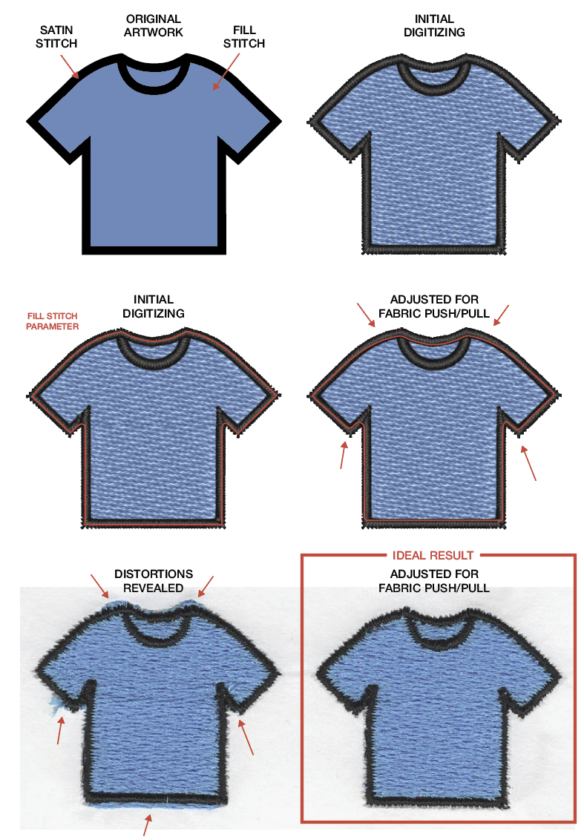
I run every failure through the same four-part lens:
- What it’s stitched on
- What it’s stitched with
- How it’s mapped
- How it’s held — substrate, thread, blueprint, and execution
Skip a layer, and it doesn’t matter how good your digitizer is. Here’s where each one goes wrong and how to close it off.
1. Start With the Substrate, Not the File
A cheap, mass-produced digitizing file is a homogenized blueprint built for a rigid woven. Fire that same file into a dynamic performance knit and it behaves like a brick skyscraper on a swamp — it sinks, it puckers, and it fails.
A dad hat and a structured cap are two different battles even though they’re both “a hat.” Structured caps have buckram-lined fronts giving you real scaffolding underneath; an unstructured dad hat has none of that and needs to be digitized and backed like the unstable substrate it is.
If your digitizer isn’t asking what the design is going on — knit or woven, structured or unstructured, pile or flat — before they build the file, they’re gambling with your machine time. Hold vendors to an industrial standard: if they won’t sew it out on the actual fabric, they haven’t finished the job.
Read this full article on Apparelist, a publication of PRINTING United Alliance, ASI’s strategic partner.