
Recently, Counselor Top 40 supplier Workwear Outfitters (asi/98258) conducted a wear trial for its Bulwark line with a group of linemen – the electrical workers that construct, maintain and repair power lines.
End-buyers in verticals like construction and manufacturing are looking for apparel that their employees want to wear off the job.
“One of their comments stuck with Kelly Connolly, Workwear Outfitters’ national account manager. ‘Instead of going home, I could meet my family after work for dinner and feel OK in these,’ the lineman reported back. ‘I didn’t feel like I was in my work clothes.’”
Workers “want to be able to go out and have dinner with their families and look like they belong,” Connolly says, “not like they just came off the manufacturing floor.”
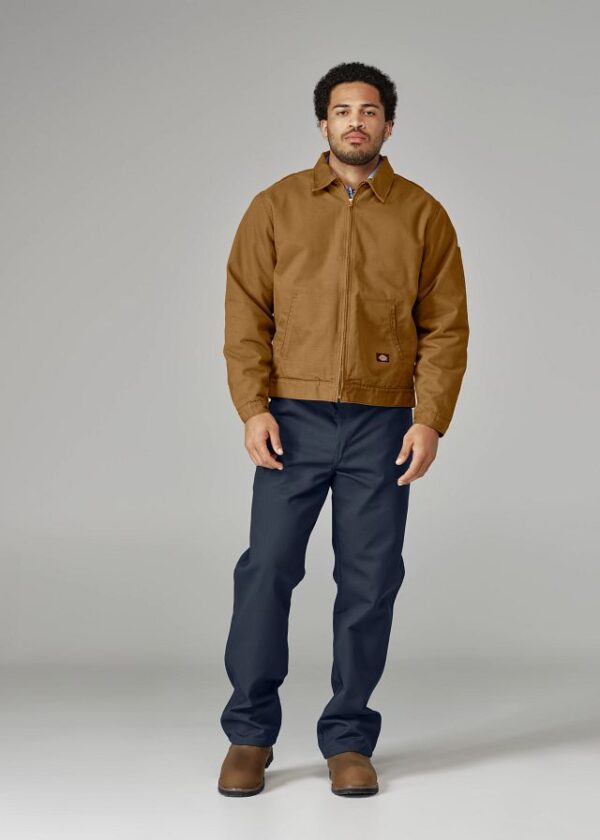
Despite a very competitive labor market across a variety of industries, Connolly says it’s often difficult for blue-collar sectors to find (and keep) good employees in fields like manufacturing – even amid the push for Made-in-USA products and American production. Taking care of employees with a quality uniform could be one way to help with retention.
“It’s tough to get good people to fill those jobs,” says Connolly. “And to me, it’s pretty remarkable the difference a uniform can make.”
Workwear After Work
Despite the significant differences between professions that require safety-proofed workwear and those that mandate business casual office attire, both segments are experiencing the same shift: End-buyers are looking for apparel that employees not only can wear outside of working hours – but that they want to.
Daniel Gottlieb, president of Gott Marketing (asi/212278), notes that sometimes this trend manifests in decoration, with his construction customers often opting for tone-on-tone embroidery or a less frontal logo placement to help encourage increased wear.
But it’s also about mirroring the comfort and style found in employees’ off-hours apparel.
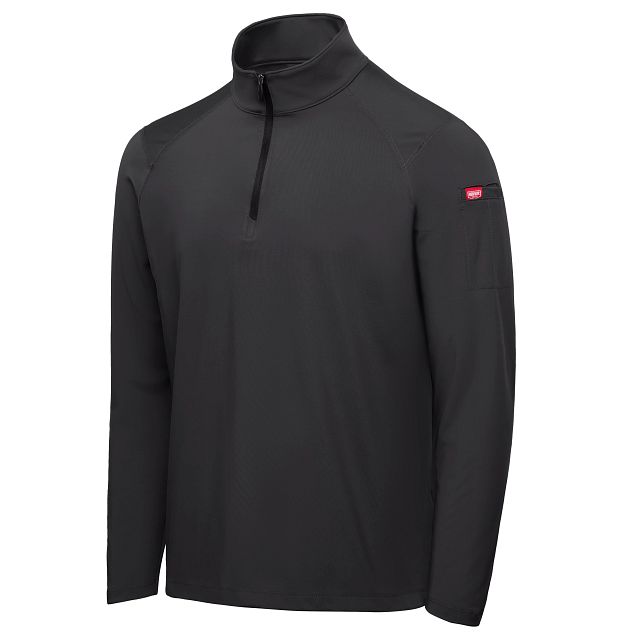
“The worlds are colliding a little bit,” adds Workwear Outfitters Vice President and General Manager John Cruser. “They really want that comfort they’re getting out of their clothes that they’re wearing on the weekends, and the challenge for us as manufacturers of workwear is how do you combine that with durability?”
For office workers, the change is often as simple as a layered quarter-zip or a more athleisure-influenced spin on classic silhouettes. Workwear, though, has to hold up to the tough physical labor demanded of the wearer regardless of its exterior appearance. Despite how much a manager might want to give out comfortable retail-style jackets for the factory floor, if they don’t meet OSHA standards, or if it’s going to rip after one wear, it’s not worth the purchase.
Cruser says Workwear Outfitters has hired a designer with a retail background whose sole job is to make sure their new products mirror that retail fit and style – without sacrificing durability or functionality.
“They ultimately don’t want to wear what Grandpa wore back in the ‘70s, ‘80s and even the ‘90s,” says Caleb Churchill, the supplier’s director of national accounts. “If I’m going to work all day, and I go out afterwards, it doesn’t look like I was working in a factory.”
Functional Bells & Whistles
Despite its necessity, or perhaps because of it, quality workwear doesn’t come cheap, says Tiffany Anderson, the corporate channel director for Dri Duck Traders (asi/50835). Heavyweight jackets or high-quality shirts can run well into the range of hundreds of dollars apiece. That’s why it’s especially important for manufacturers to offer clients enhanced features with each product – particularly in a time that’s held so much economic uncertainty.
“It’s all about performance and practicality,” Anderson says. “These days, they’re not just looking for the basic, everyday, heavy-duty gear. They want all the functionality – stretch, temperature regulation, breathability and just all over toughness.”
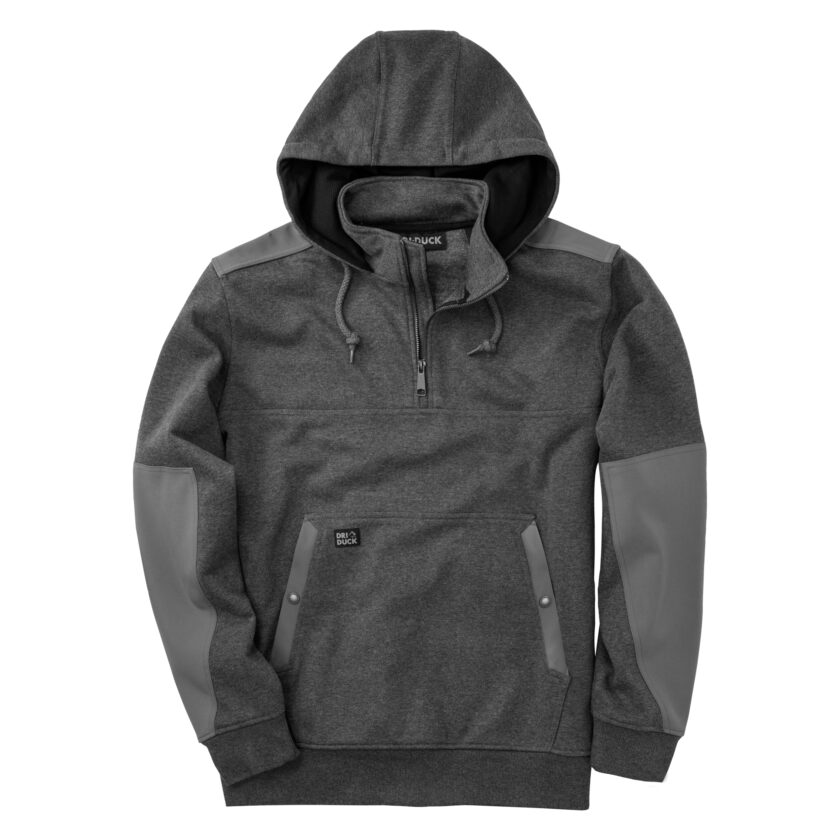
Temperature regulation in particular has become hugely important, Anderson says. Folks working outside, in all climates, need designs that are going to keep them warm while remaining breathable and not restricting movement.
Dri-Duck has focused on qualities like adding insulation without bulk through its “Grated Thinsulate” material, or better matching the natural articulation of the elbows in its jackets to ensure maximum range of motion. Even features as seemingly nonessential as pockets require care; they often need to be oversized with larger zipper pulls to account for hefty work gloves, but also in the correct location to efficiently store whatever tools are needed most frequently.
“The expectation,” Anderson says, “is that the manufacturers come to the table with durability, smart features and things that are going to contribute to the longevity of the item, but at a fair price.”
Safety First
The Occupational Safety and Health Administration (OSHA) maintains an extensive list of apparel and footwear regulations for select industries to ensure the safety of workers. Its regulations vary in scope, from high-visibility vests to hard hats to personal protective equipment.
Some categories, like outerwear, don’t necessarily come with attached regulations, so an understanding of what OSHA requires is crucial for both product design and product selection, says Tiffany Anderson, corporate channel director for Dri Duck Traders (asi/50835).
“We’re thinking about the worker and how he might need a jacket to function on the job site to be safe,” Anderson says. “A hard hat? Cool. We’re going to make three-piece hoods that are sized appropriately so they can put their coat hood over their hard hat and not have it restricted.”
It’s a complicated field, says Caleb Churchill of Workwear Outfitters (asi/98258), so it’s no wonder that promo distributors may be concerned about entering into the uniforms space if they don’t understand specific regulations for their clients’ industries. In those cases, it’s crucial to lean on your suppliers to make sure you’re effectively – and legally – meeting customer needs.
“We don’t expect the account executives to be the experts,” Churchill says. “We pride ourselves on educating not only the account executives, but doing joint end-user calls to make sure we’re talking the same language.”
Fashion Forward?
Even as workwear leans into a more heavily retail look, it has also become a streetwear or retail trend in its own right, with styles like barn jackets and utilitarian overalls having their major moment the last couple years. Brands like Dickies, Levi’s and Carhartt have become mainstream staples rather than workwear exclusives.
“The lines are getting really blurred out there, in the little coffee shop or in the little corner bars after work,” Connolly says. “People are just coming as they are.”
Gottlieb, of Gott Marketing, has observed that brand name apparel is important again, with clients asking for brands like Carhartt or North Face by name, rather than general requests for coveralls or warm jackets. Workwear Outfitters noted increased inquiries for products like Dickies Eisenhower jackets or Red Kap Team jackets that match the trendy streetwear style of the moment. Dri-Duck adds that it has leaned specifically into performance fabrics to help “level up” even those most traditional silhouettes.
In some ways, the increased all-around interest has allowed for Dri-Duck and perhaps other suppliers to diversify its sales beyond – and within – the traditional blue-collar sectors.
It’s even created opportunity to upsell. Joe Moncada, office manager at Rugged Outfitters (asi/84143), has done a huge amount of business in accessories from top brands, meeting interest for recognizable names even if the traditional uniform segments are already accounted for. He recently fulfilled an order of several hundred Carhartt-branded car organizers, for example.
And more elevated workwear jackets, Anderson says, could be suitable for the corporate offices and floor managers while still matching the rest of the company’s style. “You’re still going to have your classic ‘good old boy’ cotton canvas-wearing consumer – we sell a ton of it,” Anderson says. “But the different demographics have different preferences.”
At the end of the day, it’s all about balancing style and longevity. Workwear is built to last, which makes sense that most company uniform programs are locked in for at least two or three years at a time to avoid constantly replacing goods.
“When you look at the way we roll out product, we don’t roll out anything to be seasonal,” Churchill says. “If we launch anything, we expect it to be in our line for 10 years at minimum.”