
Key Takeaways
• McGill University researchers found that several BPA alternatives used in grocery price labels can migrate into food and disrupt ovarian cell functions, gene activity and DNA repair.
• Replacing BPA with other bisphenols (like BPS or TGSA) often happens without thorough safety testing, and studies show such labels can falsely reassure consumers despite unknown or similar risks.
• Canada has flagged the compounds included in the McGill study for further review.
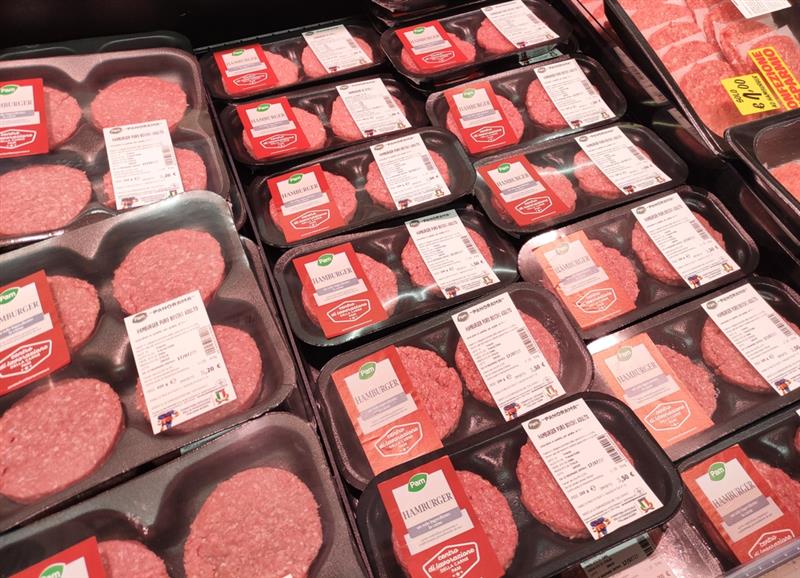
Scientists at McGill University in Montreal found that several BPA substitutes commonly used in price labels and food packaging at grocery stores could seep into the food and interfere with human ovarian cells.
According to ScienceDaily, the team at McGill analyzed substances used as adhesive for price stickers – such as TGSA, D-8, PF-201 and BPS – on standard grocery store items like meat, cheese and produce. The scientists exposed lab-grown ovarian cells to the four BPA alternatives and found that some, including TGSA and D-8, led to fat droplet buildup inside the cells and altered gene activity associated with cell growth and DNA repair.
BPA has been found to be potentially harmful for hormone activity and fertility. Due to the potential risks, BPA for use in baby bottles has been banned in the U.S., Canada and the EU.
In 2016, the European Food Safety Authority formed a group of international experts to evaluate the potential risk of BPA on the immune system.
“These are major cellular functions,” Bernard Robaire, a co-senior author of the study and professor at McGill’s Department of Pharmacology & Therapeutics and Obstetrics & Gynecology, said, according to ScienceDaily. “Disrupting them doesn’t prove harm in humans, but it gives us a strong signal that these chemicals should be further investigated.”
The recent study was conducted following a 2023 report, also from McGill, that showed that chemicals used in label printing, such as BPS, could migrate through plastic wrap and into food.
While the McGill study does not make any firm claim that all BPA alternatives could be harmful, it brings about the issue of using another material simply because it’s not BPA, without any of the rigorous testing necessary to prove a safe alternative.
“‘BPA-free’ is an incredibly misleading label,” Robaire said. “It usually means one bisphenol has been swapped for another, and there are more than 200 of them. Some may be just as harmful, or even worse. We need to test these compounds before they’re widely adopted, not after.”
Robaire’s claim is backed by consumer research, too. In 2014, a team at the University of Michigan found that simply labeling a product “BPA-free” made participants in the study feel more at ease with using the product, even though they didn’t know what the alternative substance was or whether it could potentially be harmful as well.
“In other words, the findings indicate that labels like this are misleading and are likely to cause some people to accept substitute chemicals that they might otherwise reject,” University of Michigan researcher Andrew Maynard wrote at the time. “It indicates that labeling a product as being free of a particular chemical leads to a lack of consideration over the risks potentially presented by substitute materials. And it suggests that care needs to be taken in how evidence and risk are communicated if substitutes aren’t to become regrettable substitutions – whether making decisions on BPA or any other substance where there is some element of doubt over risk and safety.”
As a result of the McGill study, Canada has added the four compounds used by the researchers at McGill to a list of substances requiring further review.
The scientific community has been active in finding safer BPA alternatives for labels. Recently, scientists in Switzerland created a developer for thermal paper derived from lignan in wood.