
There’s the belief that if you want something done right, do it yourself.
This is, of course, a massive oversimplification when it comes to decorated products like promotional products and apparel. But that mindset has prompted some promotional products and print distributors to bring decoration services in-house rather than contracting them out.
In 2007, Garment Graphics (asi/201682) notified its outsourcing partners that by 2008 it would be bringing everything in-house. By then, the company had been in business for 15 years. But it had gotten to the point where deliveries weren’t always on time, and it felt like its decorator partners were prioritizing other clients’ work.
“We wanted more control – not just over timelines, but over quality,” says Holly Polston, president of Garment Graphics. “So we made it part of our long-term business plan to bring decoration in-house.”
Polston’s story is not rare in the printing and promotional products industry. Distributors, as they grow, have enjoyed the level of control over the print quality and speed that comes with in-house decoration. This could be embroidery, screen printing, direct-to-film transfers or any number of other decoration methods. That all depends on the resources – both money and human hands – and space available.
Bringing decoration in-house can be both rewarding and challenging, and it’s something that distributors of all sizes could theoretically do. It’s just a matter of planning, analytics and scale.
Setting Up Shop
Midwest Promotional Group (asi/270800), a distributor based in Burr Ridge, IL, has been offering in-house decoration as part of its business model for about 30 years, according to Chief Financial Officer Steve DeBoer. Midwest had already been doing screen printing and heat transfers, and over the last few years brought in direct to film for smaller orders.
“The idea behind DTF was that we were doing a lot of heat transfer work, and also a lot of screen printing – especially smaller jobs with more than three colors,” he says. “DTF really filled both of those needs for us.”
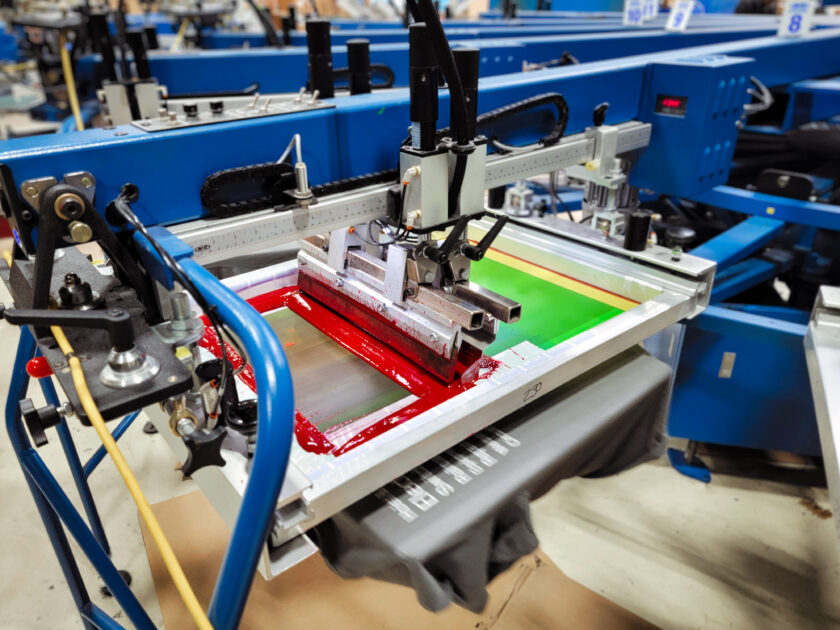
Direct-to-film printing has a relatively low barrier for entry. The printing equipment itself can be quite small to fit distributorships of almost any size, rather than room-dominating embroidery or screen-printing machines. It also allows for printing on demand for smaller orders where warehousing wouldn’t be possible.
Polston also uses online stores as an example of where in-house decoration comes in handy, especially for relatively smaller companies.
“If an item doesn’t fully sell out online, our in-house capabilities allow us to fulfill smaller leftover quantities without issues,” she says.
For other brands, namely bigger distributors like BAMKO (asi/131431), a Counselor Top 40 distributor, the addition of in-house decoration can still come incrementally, but it can be done through acquisition rather than simple equipment investment or staff additions.
BAMKO, which does its in-house laser engraving, digital printing and embroidery in its 120,000-sq.-ft. Phoenix facility, began its in-house decoration growth with its 2021 acquisition of Sutter’s Mill Specialties.
For distributors bringing decoration in-house, whether they’re buying a printer or a company, the cost needs to make sense.
“We looked at how much we were paying outside contractors and realized that since we already had steady demand for embroidery and screen printing, bringing it in-house would give us a consistent stream of work,” Polston says. “So, instead of paying others, we’re essentially paying ourselves. It’s not necessarily about higher margins – it’s about keeping that revenue in-house.”
Polston says that her company continued to monitor the profitability and cost-effectiveness of different print techniques over time, even eliminating some.
“We did try sublimation at one point, but it wasn’t worth it for us,” she says. “It’s better to outsource that. The technology has evolved a lot, and we have strong partners who specialize in it. Also, sublimation requires ongoing use – if you’re not doing it regularly, it’s hard to maintain. We also decided not to bring in direct to garment at this time.”
Polston adds that two years ago, they did decide to add laser engraving partially out of necessity.
“We use it for a private collection of items – things like water bottles, office products and cutting boards, especially in smaller quantities,” she says. “We used to work with a supplier for small runs, but they stopped offering that service. We had built a customer base that valued those smaller quantities, so bringing laser in-house allowed us to continue serving them.”
DeBoer puts it simply: Less equipment means that the equipment you do have is more likely to be running at high capacity.
“You actually want less equipment than the amount of work you have, so you can keep it running consistently throughout the year,” he says. “Then, during busy times, you can rely on third-party decorators.”
The Pressure of Being All Things
The idea of being a “one-stop shop” in print and promo is certainly appealing. But, like any endeavor, multitasking too much can cause burnout. In this industry, that means potentially failing financially or failing to meet customer deadlines and losing business.
Decoration doesn’t need to be a zero-sum game, where you either do all of it in-house or none of it.
DeBoer says that Midwest works with about a dozen contract decorators, and relies on them especially during their busiest times of year.
Even Jake Himelstein, president of BAMKO and a member of the Counselor Power 50 list of the industry’s most influential people, says that BAMKO needs to continue to rely on its decoration partners.
Himelstein says that BAMKO is selective of what scenarios would call for in-house decoration versus outsourcing.
“The capacity is limited and focuses primarily on rush jobs and variable one-offs, where using our in-house capabilities is easier and more cost-effective,” Himelstein says. “The vast majority of our decorating still occurs at our decorators’ and suppliers’ locations.”
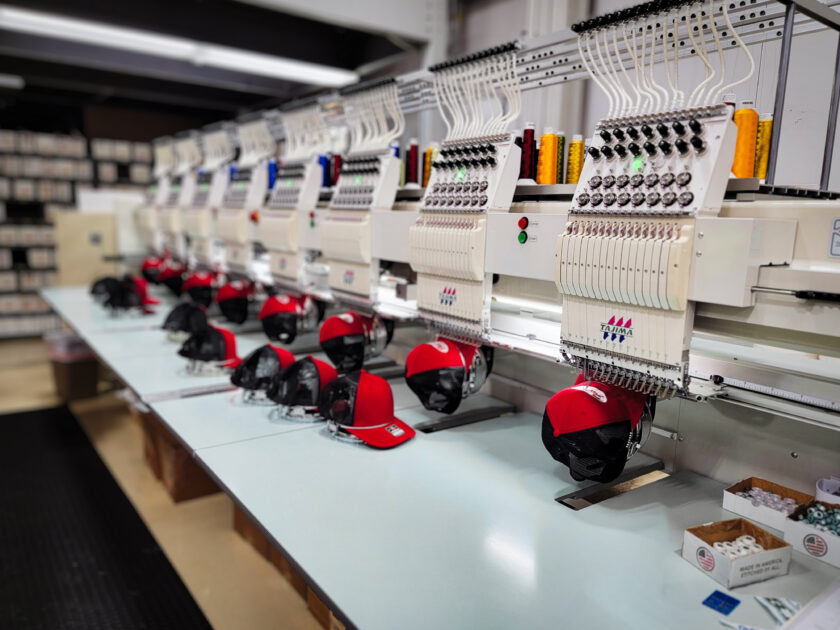
Bringing decoration in-house can help “protect” revenue, as Polston says, by metaphorically keeping the money you’d spend on decoration within the company. But, simply bringing decoration in-house isn’t a guaranteed way to stay profitable. Equipment and maintenance aren’t free, and staff or training to handle the decoration is something that a distributor needs to consider.
“I wouldn’t have done it without already having a clear understanding of the numbers,” Polston says. “You need to know what it takes to break even and eventually make it profitable.”
Three Steps Toward In-House Decoration
Interested in bringing some decoration in-house? Here are three actionable steps to get on your way.
- Run the Numbers: Before investing in any equipment or staff training, ensure that it would be a profitable endeavor.
- Address Demand: Any investment should align with what sort of decoration your customers order and keep the machines running regularly.
- Fit Your Space: Ensure that any equipment or decorating jobs make sense for your facility, whether it’s a warehouse or a garage.
Polston says that Garment Graphics also dabbled in serving as a contract decorator for others, which a distributor could do to keep equipment from going idle. DeBoer says it can create repeat orders, as once they’ve worked with one decorator, they’re likely to return when things get busy again. But this presents the same set of questions as decorating for yourself – do you have the time and resources to handle it?
“When you’re decorating for others, you’re managing their inventory, shipping and receiving,” Polston says. “It adds complexity.”
After crunching the numbers, if a distributor feels confident to begin decorating on its own, Polston says that screen printing isn’t the best place to start.
“If I were advising someone, I’d suggest starting with embroidery and heat transfers before moving into screen printing,” she says. “Screen printing requires a higher level of expertise and complexity.”
But, if you feel up to managing the complexity, in-house decoration can provide a more granular level of control over every item going out the door.
“It’s great for quality control,” DeBoer says. “You can see, touch and inspect everything before it ships. But it’s not for everyone.”