
When Kurt Hoge began working as a direct mail coupon designer in 1986, it didn’t take long for him to learn why it’s a powerful marketing tool.
“The value of direct mail is that it’s something tangible and tactile,” says Hoge, who is now the president of Reno Type, a Reno, NV-based print and promotional marketing firm that specializes in direct mail campaigns. “When you care enough to put in the resources to print something and mail it, that says something about a company’s realness and permanence.”
Forty years later, Hoge says direct mail is having a major comeback. According to a 2025 report commissioned by direct mail automation platform Lob, Gen Z and millennials are fueling the direct-mail renaissance, with 85% of younger audiences engaging with the medium – higher than both Gen Xers and baby boomers. And 84% of consumers read direct mail immediately after they receive it.
But executing a successful direct mail campaign is both an art and a science. Getting it right requires a commitment to creativity, a data-informed targeting strategy and a short-term monetary investment that supports long-term return.
A Medium That Stands Out
David McNerney, founder and CEO of marketing execution company Think Patented (asi/379087), recently had a conversation about direct mail that struck him.
“I was at breakfast with someone who runs a multibillion-dollar organization, and he told me: ‘I delete more emails than I read, but I get my mail every day, and I scan it every single day. Sometimes I throw it away, but if something catches my attention, I set it aside and I go back to it later,’” McNerney recalls of the conversation.
Of course, the term “junk mail” exists for a reason. Some mail, McNerney says, belongs in the trash.
“I think most mail gets thrown away because it looks like it deserves to be thrown away,” he explains. “It feels mass-produced. It’s generic. It’s irrelevant to the individual recipient. The goal is to not treat it like junk mail. That means the offer, the imagery, the wording, the design – it all must be relevant.”
In the digital age, it seems rational that brands would gravitate toward online advertising and email marketing to get their message out. But according to Hoge, anyone can send an email; direct mail, on the other hand, says what these other mediums don’t.
“It tells people, ‘We’ll be here when you need us,’” adds Hoge. “Emails and digital ads can’t quite do that in the same way.”
That doesn’t mean brands should stop advertising on social media or digital platforms. Instead, they should use a multichannel strategy to get their message out.
“Direct mail can complement all of the other platforms and mediums you use to promote your products and services,” he says.

Direct mail tells people, ‘We’ll be here when you need us.’ Emails and digital ads can’t quite do that in the same way.”
Kurt hoge, Reno type
Know Your Audience
It’s one of the cardinal rules of marketing and advertising: Understand who you’re trying to reach. But when it comes to direct mail targeting, McNerney says many brands are missing the mark.
“Personalization isn’t just about using the recipient’s name in your marketing materials,” he says. “It’s also about understanding whether you’re sending a piece to a 65-year-old versus a 40-year-old person with three kids.”
McNerney says that many brands are so quick to get their marketing materials out the door that they forget to consider their audience.
“They’re rushing and downloading their data list from their CRM platform, or buying a list and just sending it out,” he adds. “Direct mail without good data isn’t marketing. It’s just hope, and hope isn’t a strategy.”
Instead, McNerney recommends doing a deep dive into the quality of the audience. Ask yourself, “what are the demographics?” he advises. “What’s the behavior? What’s their purchase history? How about their geographic location?”
Hoge’s clients often approach him with a request to target specific zip codes.
“When I ask them why they chose to target that location, they tell me, ‘Well, that’s where the rich people live.’”
On the surface, Hoge notes, this makes business sense. People who have more wealth might be more willing to spend their money than people with fewer financial resources. But instead of simply focusing on zip codes, Hoge recommends tapping some additional data that might shed more light on an individual’s financial standing. Examples include finding out their household income.
“What’s their net worth? How much is their home worth? What kind of car do they drive? Do they have stocks? Do they invest? What’s their credit rating? All of this data is easy for us to get,” he says.

“Direct mail without good data isn’t marketing. It’s just hope, and hope isn’t a strategy.”
DAvid McNerny, think patented (asi/379087)
Sometimes these metrics themselves can help shape a brand’s overall marketing strategy, McNerney adds. The data can tell a story about what your audience might be looking for, and offer insight into which products and promotions would resonate with them.
Case Study: The Power of Personalization
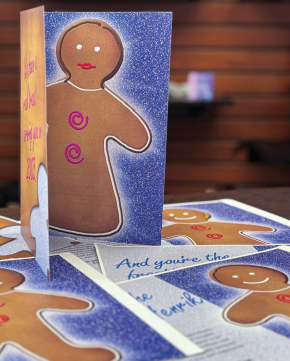
Reno Type took personalization to a whole new level with a holiday card mailer campaign featuring a gingerbread character made to resemble each recipient. The design team created caricatures from a library of 112 graphic elements including gender, hair length and color, facial hair and eyeglasses.
“By combining these elements on the fly, the system generated up to 124,000 unique designs, allowing each recipient to receive a gingerbread ‘look-alike’ version of themselves,” explains Kurt Hoge, president of the company.
Once recipients opened their cards, they were given the option to send a “sweet treat” of their own. An insert directed them to a website where they could create gingerbread caricatures for their friends and co-workers by entering their physical characteristics into a database. Each submission generated a new personalized mailing, turning recipients into campaign participants.
The original mailing campaign consisted of only 350 pieces, but once recipients created and sent cards to others, the program ultimately generated more than 1,000 new database entries and mailings, and led to a response rate exceeding 300%.
“Direct mail works best when it stops being a message and becomes an experience,” says Hoge. “Once the recipient becomes part of the campaign, the response can grow far beyond the original mailing.”
For example, once a brand knows the birth date of their customers or prospects, they can use a marketing tactic known as a life stage trigger.
“When someone turns 50 years old or 60 years old, brands can recommend certain types of products,” McNerney says.
Companies can also personalize their marketing activities based on a person’s purchase history.
“Did that person buy from you in the past? And if they did, what did they buy?” he says.
McNerney and his team at Think Patented worked with one company to analyze its in-store data, and leveraged the results to target repeat buyers. They noticed a trend that sparked their curiosity: Customers who bought a mattress were more likely to return to the store and spend more money than if they bought any other product.
So, McNerney and his team worked with the customer to put together a campaign that focused more mattresses because they knew it would increase sales.
Intentional Design Matters
Once brands know who to target, they can begin to be strategic about how to incorporate thoughtful design into their mail piece.
“You need to create the piece to be relevant to different people and categories,” says McNerney. “Then, determine what the piece is communicating, and develop a design based on that.”
Indeed, intentional design is about more than just choosing the right colors or format.
“It’s also the little things people don’t think about,” McNerney says. “If you’re trying to market a high-dollar item, you don’t want to use the cheapest piece of paper. Instead, a direct mail piece featuring a thick substrate with high gloss will get more engagement.”
He adds that other tactile components, such as foil, a raised UV or a scratch-off can make a direct mail piece stand out.
Measuring Success
When it comes to executing a direct mail marketing campaign, producing and sending a piece of mail is just one small part of the equation.
“You also need to make sure you’re tracking your success,” says McNerney. “If you can’t track it, you can’t optimize it. And if you can’t optimize it, you can’t improve it.”
But unlike digital ads and email marketing tactics, where real-time analytics are readily available, a direct mail campaign is a bit more difficult to measure. For instance, a company can track how many people received the mailer, but it’s harder to measure how many people actually looked at it.
“With digital media, you can easily figure out the open rate and response rate,” Hoge says. “Once you send a postcard out, nothing happens. With direct mail, you only find out traditionally if someone redeems the offer. If you’re a CMO of a big company and you don’t have metrics, that’s really difficult to manage.”
However, Hoge says tracking tools for direct mail are beginning to improve.
“The USPS has an API that savvy marketers can tie into and get some amazing additional data,” he notes.
USPS’ Informed Delivery platform, for example, allows people to receive an email that tells them what’s about to be delivered in their mailbox on any given day.
Engaging the Senses
Beginning in January, the U.S. Postal Service kicked off its Tactile, Sensory & Interactive Promotion. Through June 30, 2026, mailers that incorporate a multisensory experience featuring special visual effects, sound, scent, texture/tactile treatments or even taste in their direct mail pieces will receive a 5% postage discount.
“And now, the Post Office automatically opts people in when they change their address,” says Hoge. “That means that if the advertiser knows the address that they’re sending something to, they can append a full-color clickable ad to that informed delivery email through the Post Office’s API. It’s nearly free and it adds an additional impression.”
He adds that the API allows brands to track open rates and click-through rates.
“Not only are we increasing impressions, we’re also lowering the cost-per-impression of a direct mail piece because we’re measuring it,” he explains.
When it comes to B2B campaigns, however, it’s harder to get a handle on this data, because it’s often unclear who at the company will be opening the piece of mail.
“If the mailer is addressed to a CEO, I can only guarantee the receptionist will see it,” Hoge explains. “They’re probably not going to put it on the CEO’s desk, no matter how beautifully designed the card or the quality of the offer. It’s never going to get past the gatekeeper.”
This, Hoge says, is a prime opportunity to marry print and promotional products.
“This is what we call bumpy mail,” he explains. “Think about, at the very least, adding a pen. Yes, it’s just a pen. Everyone can tell it’s a pen. But the fact that now the mail piece has some texture means it’s more likely to get onto the right person’s desk.”
Another potential print-and-promo crossover? A gift box.
“A box with the recipient’s name and a piece of string around it pretty much always gets to the right person,” he says.
And yet, many of Hoge’s customers don’t want to spend the extra money up front that these additional touches require.
“Some people rule it out right away and say it’s too expensive,” he says. But instead of worrying about the cost of each piece of mail, Hoge encourages people to instead consider the cost-per-impression.
“If you spent $12 on a piece of mail that got into the right hands, and now that company is going to do a million dollars in business with you, do you really care that you spent $12 trying to get their attention?” he says. “That’s the math many people miss.”