
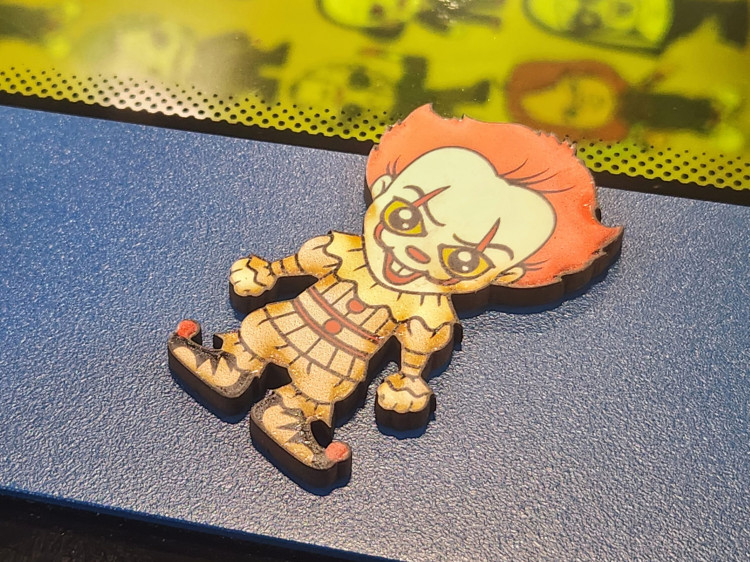
For a print service provider (PSP), finishing can be the point where a fast digital workflow slows down, and with automation on the brain, who still wants to hand cut something?
Printed fabric still needs to be cut. Acrylic may need an edge treatment. Customized pieces can demand setup and handling after the printer finishes its job. We paid a visit to laser cutting and engraving vendors Trotec, SEI Laser by Matik, Summa, and Epilog Laser at the 2026 PRINTING United Expo — where they argued that laser cutting and engraving technology can address those steps while opening up new products and capabilities.
Their interviews point to five key takeaways: lasers can combine cutting with edge finishing; vision and software can simplify print-to-cut work; automation can ease labor demands; laser engraving can add value to existing products; and familiar assumptions about lasers deserve a closer look.
1. Cutting Can Also Finish the Edge
The appeal of laser cutting begins with what happens at the cut. For some materials, a laser can leave an edge that needs less work afterward.
Braden Todd, owner of GS2 Awards, a Trotec distributor, explains, “As far as finishing, if you’re printing and then doing print-to-cut, the laser is going to cut the material, whether it’s acrylic, wood, fabrics, and then when it cuts, it’s going to essentially seal the edge.” He adds, “If it’s a fabric, it will cut and then melt the fibers together, so then it doesn’t fray, it doesn’t rip, it doesn’t tear. If it’s acrylic, then you get the flame polished edge, so there’s no post processing after that.”
For a shop producing textile displays, flags, or garments, the potential to reduce fraying is relevant. For acrylic work, a polished edge can eliminate an additional step. Those outcomes are material dependent, making sample cuts on a shop’s actual substrates important.
Steve Leibin, president of SEI Laser by Matik, sees lasers that fit with printing as part of a wider shift in production methods.
“Laser is the digital cutting process to match with your digital printing process,” Leibin says. “Now you have a complete digital workflow that’s extremely efficient, uses less waste, lowers changeovers. You have greater creativity and flexibility in what you do.”
Read this full article on Printing Impressions, a publication of PRINTING United Alliance, ASI’s strategic partner.