
Key Takeaways
• Researchers at École Polytechnique Fédérale de Lausanne developed a thermal paper coating using lignin from wood and a sugar-based sensitizer, offering a low-toxicity, bio-based alternative to BPA/BPS commonly used in receipts.
• The new coatings achieved color density and durability comparable to BPA-based thermal paper, remaining stable for months in light and legible for over a year.
• This breakthrough could significantly reduce BPA exposure (especially for workers like cashiers) and supports the broader push toward safer, more sustainable printing and packaging materials.
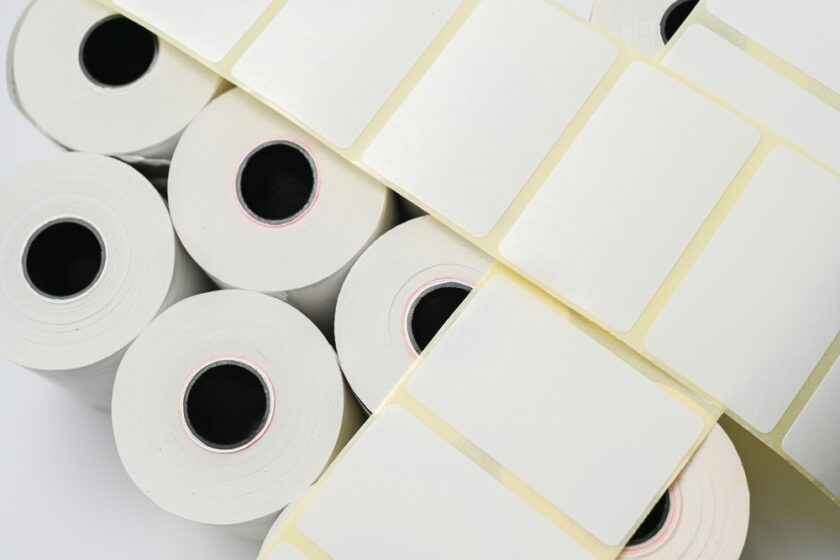
A team of researchers at the École Polytechnique Fédérale de Lausanne in Switzerland have found a potential alternative for BPA and BPS as a developer in thermal paper, commonly used for receipts.
The team, led by scientists Jeremy Luterbacher and Harm-Anton Klok, developed thermal paper coatings that use lignin, derived from wood, along with a sensitizer made from plant sugars.
“We have developed thermal paper formulations – which are commonly found in daily products like cash receipts, package labels, airline tickets, etc. – made from plant-based molecules that have very low or no toxic signatures,” Luterbacher said, as reported by Science.org.
Luterbacher was also part of a study in 2014 that developed a method for extracting lignin from plants without destroying them.
To combat the fact that lignin is naturally dark, the researchers used an extraction method that they called “sequential aldehyde-assisted fractionation.” This method produced light-colored lignin polymers, which would interfere less with printing, and allowed them to be mixed in the thermal layer for the necessary reaction. The sensitizer, which melts when heated and helps dye and developer interact, was derived from a molecule made from xylan, which is naturally found in cell walls, and applied the mixture to paper and was tested on commercial printers.
The researchers found that the color density values were in the range needed for commercial thermal paper, and that coatings remained stable when stored in natural light near a window for months at a time. Printed logos on the paper remained legible even after a year. The team did find that image contrast was “still lower than that of fully optimized commercial paper,” according to Phys.org, but overall the performance of the new paper matched BPA-based thermal papers commonly used in the marketplace while limiting potential toxicity.
The team wrote in its findings on Science.org that this breakthrough could have major ripples in the printing and packaging space as the industry strives for greater environmentalism and safety.
“Overall, the proposed formulations not only provide a viable and promising pathway toward safer and bio-based thermal papers but also showcase the potential of functionalized and preserved natural structures for formulating cheap and safe renewable products for everyday use,” the team wrote in its discussion. “While this study focused on static sensitivity, future work should also explore dynamic sensitivity to capture the rate of color formation, as this will have important implications for real-world printing performance.”
The Latest in Bio Breakthroughs
Scientists and researchers in the printing space have been consistently looking for more environmentally friendly ways to print. In 2022, printers started to adopt ink made from black algae, which had already been used for applications in apparel, such as dyeing T-shirts.
In 2024, researchers at Clemson University studied how an invasive and fast-growing plant called kudzu – nicknamed “the vine that ate the south” – could be used for biodegradable food packaging.
These sorts of innovations match the continued demand for greener print products. In 2024, Canadian lawmakers pushed for compostable produce stickers.
Limiting BPA exposure for those who work with thermal paper – for example, cashiers who regularly handle receipts – would be another major breakthrough in commercial printing.