
Key Takeaways
• Only about 2% to 3% of apparel sold in the U.S. is made domestically today, compared with nearly 70% in 1980, and industry leaders say a large-scale return of apparel manufacturing to the U.S. is unlikely given infrastructure and labor constraints.
• Suppliers that manufacture in the U.S. say controlling the full production process can provide advantages like faster turnaround times, consistent product quality and the ability to make last-minute changes for clients.
• Higher labor costs and a limited workforce remain challenges for domestic apparel makers, though tariffs and supply chain instability have narrowed the price gap between imported and U.S.-made apparel in recent years.
At the beginning of this year, Royal Apparel (asi/83731) revealed plans for expansion by purchasing an additional manufacturing facility in its home city of Hauppage, NY. That news came a few months after the Made-in-the USA apparel supplier cut the ribbon on its first West Coast distribution center in San Bernardino, CA.
Sales Director Glen Brumer attributes much of the company’s growth to the quality of what it produces, but there are other factors in play as well. Starting in 2025, supply chain instability brought on by constantly shifting tariffs had many new clients seeking out domestic sourcing solutions. And this year, as the country approaches its semiquincentennial, another wave of demand is cresting. “We’re seeing a lift because of America250, for sure,” Brumer says.
There are other pockets of positivity in the Made-in-USA apparel scene. For example, American Giant, a brand launched in 2011 and known for what Slate once dubbed “the greatest hoodie ever made,” was in the news in 2024, reaching a deal to produce 100% American-made T-shirts for $12.98 for Walmart. Those tees were so successful, founder Bayard Winthrop told The Wall Street Journal that it was expanding the partnership to include a $40 hoodie (a much lower price point than its typical fare). The brand, available in promo through Counselor Top 40 supplier PCNA (asi/66887), also recently relaunched its iconic hoodie with softer 100% U.S.-grown heavyweight cotton fleece.
But those stories are in the minority.
Only about 2% to 3% of apparel in the U.S. is domestically made, according to data from the American Apparel & Footwear Association. Contrast that to 1980 when nearly 70% of clothing Americans wore was made in the USA.
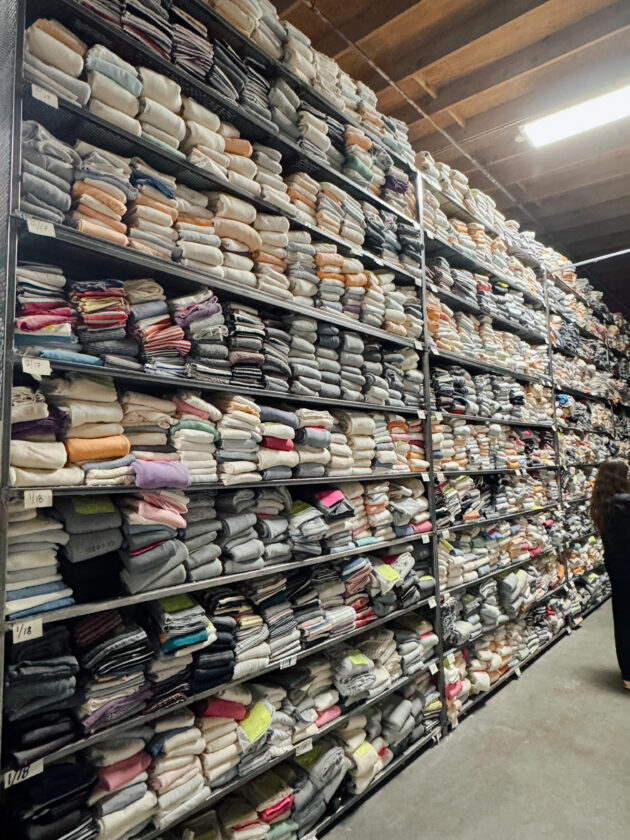
Though there’s oft-cited interest in boosting those figures (75% of tech industry end-buyers, for instance, say it’s important that the promo products they receive are U.S.-made, according to 2025 ASI research), the apparel manufacturing infrastructure and skilled labor force that existed half a century ago are largely extinct, and brands aren’t making moves to pull a Jurassic Park-style resurrection on the industry. As Counselor Top 40 supplier SanMar (asi/84863) CEO Jeremy Lott, a member of the Counselor Power 50 list of most influential people in promo, put it during a panel at ThreadX last year: “It’s exceptionally hard to build apparel capacity and scale in the U.S. today.”
Still, for the apparel and accessory suppliers that have found a niche in domestic manufacturing, the rewards outweigh the challenges. “It’s not easy to do at all,” Brumer says. But, “It’s all we’ve ever done. It’s what we know how to do.”
‘What We’re Best At’
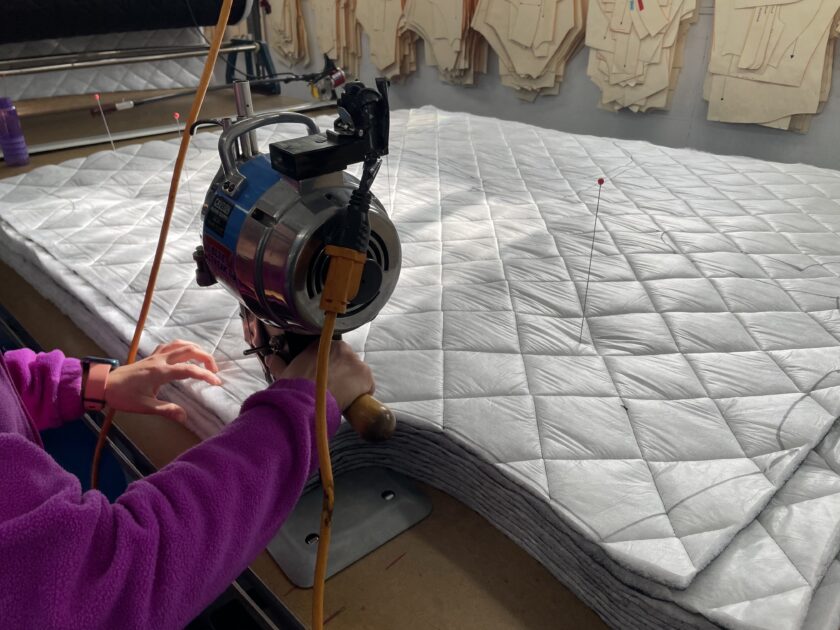
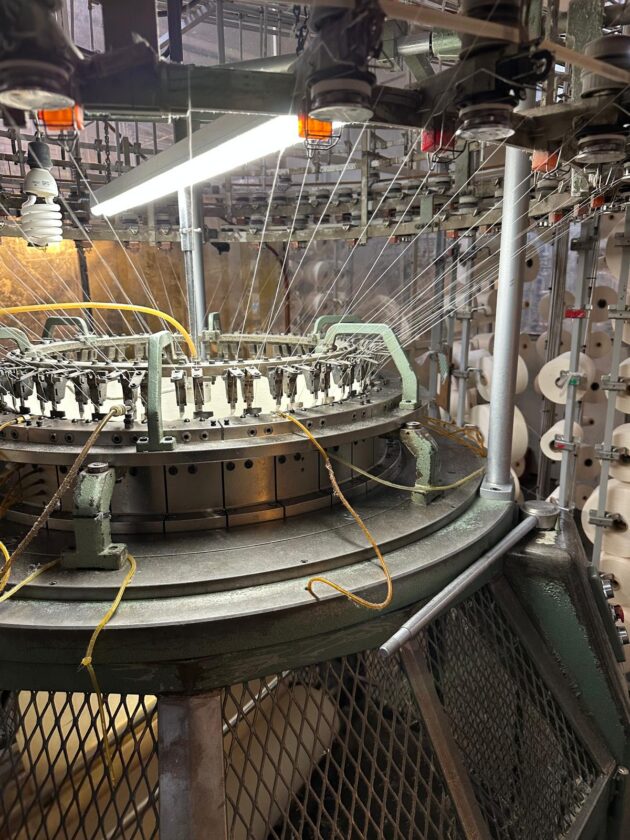
One big benefit, domestic apparel makers say, is the control they have over their processes, which affects everything from product quality to speed to market. Vernon, CA-based US Standard Apparel (asi/93179) offers a 100% made-in-America model, starting with the cotton it sources for its premium blanks. “We knit all of our own fabric, we cut, we sew, we dye, we do finishing – everything in-house,” says Tim Gibson, president of sales.
That ability has come in handy when competitors couldn’t deliver. For instance, the supplier offers custom Pantone colors with a two-week turnaround.
“Most of the other brands out there, just getting replenishment if they run out of stock, it takes them four months,” he says.
Gibson recalls a time when Taylor Swift’s merch machine sold out of her top-selling custom-color garment in the middle of a tour and couldn’t restock quickly enough from its original vendor. “Her record label sent us a sample and asked if we could make 50,000 of them in like two weeks,” he says. “So, we immediately went into production, made a sample, overnighted it to them, got the color approved … and we started shipping them within days and filling them with inventory. Speed is absolutely critical.”
Controlling the production process also allows domestic suppliers to laser focus on product quality. Austin, TX-based Sock Club (asi/88072) makes 90% of its custom socks in the U.S., sourcing spun cotton from several states to make its own yarn, building just the right mix of staple fibers to ensure a consistent finished product. “We don’t outsource design, and we don’t outsource production because that’s what we’re best at,” says CEO Noah Lee. “We’re not the cheapest, but we’re the most reliable and trustworthy and do what we say.”
A made-in-the-USA product model also helps with customer service and accommodating last-minute changes, says Cary Heller, vice president of sales at All USA Clothing (asi/30171).
“You can’t call China and say, ‘Hold on, stop. We’ve got to do something different.’ That would be a massive nightmare,” he says. But All USA Clothing, which specializes in sourcing union-made apparel, can do just that with its factory partners. He knows them all by name and can pick up the phone to easily make real-time changes to accommodate customer needs.
There’s also an environmental and social responsibility aspect to domestic sourcing. Lee is hesitant to call his own products sustainable, noting that cotton can be “a pretty harsh crop” that requires a lot of fertilizer and water, and can strip resources from the soil. But, he adds, Sock Club’s products are dyed stateside, following regulations that are often more stringent than in other parts of the world. Plus, the cotton the supplier sources travels from Georgia to North Carolina where it’s assembled into long-lasting socks. “Our product is geographically local, our carbon footprint is smaller, and I meet people all the time who got a pair of socks from us 10 years ago and are still wearing it,” Lee says.
‘These Hands Cost A Lot More’
When it comes to convincing end-buyers to choose American-made apparel, one of the biggest sticking points is price. “Costs are higher, no question, because these hands cost a lot more here,” says Eric Henry, CEO of B Corp-certified TS Designs, a North Carolina-based apparel decorator focused on building hyperlocal supply chains and sourcing natural fibers. “Paying a living wage in the U.S. is higher than, say, a living wage in Vietnam.”
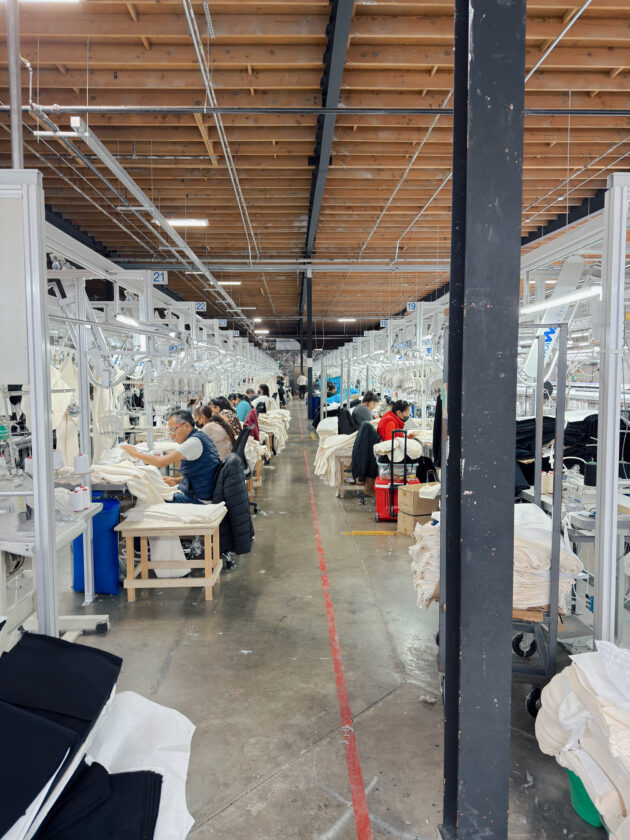
It can also be a challenge for domestic apparel suppliers to find and retain labor. Heller puts it bluntly: “Your typical American doesn’t want to work in a factory behind a sewing machine for eight hours a day, even if you’re paying them union wages. They just don’t want to do it.”
The secret, says Gibson, is to do everything you can to keep the skilled teams you’ve already built since there’s not a huge labor pool available. “If you have to lay people off, they’re going to find work elsewhere,” he adds.
Tariffs and supply chain fluctuations in the last few years have converged to make domestic apparel a more attractive play. The price difference between an imported blank and a domestically made one has been getting smaller, according to Gibson. It used to be around a $3 difference between comparable styles, but these days it could be about half that, he adds.
While it’s unlikely that production of low-priced “commodity” tees will ever come back to the United States and it’s “a little pie in the sky,” Brumer says, to think the apparel industry, on balance, will reshore anytime soon, that doesn’t mean change is impossible.
“I’d be really happy to see incremental jumps in how much apparel is made in the U.S.,” Brumer adds. “Can we get it back to 10%?”
How Legislation Could ‘Level the Playing Field’ for Made in the USA
Eric Henry, CEO of TS Designs, has been in the apparel industry for decades, championing natural fibers and transparent, local supply chains. He’s seen firsthand the shrinking of the domestic apparel business in his home state of North Carolina and talked at length with the cotton farmers struggling to make ends meet. “I’ve been in the industry now for 45 years, and we’re the closest on the ropes we’ve ever been to a complete collapse,” he says, while acknowledging that “we live in a global economy; we’re not putting that genie back in a bottle.”
But, he adds, there are ways to “level the playing field” to make it easier for everyone in the domestic supply chain, from farmers to screen printers, to make a go of made-in-USA products.

He points to two bills introduced into Congress recently that have the potential to help:
American Products in Parks Act: This bipartisan legislation would require all merch sold at National Park Service gift shops to be made in the U.S., including sourcing and final assembly. The bill aims to boost domestic manufacturing and local economies, aligning with broader efforts to revive U.S. production and coinciding with the 250th anniversary of the signing of the Declaration of Independence this year.
Buying American Cotton Act of 2025: This bill would create a new domestic cotton consumption tax credit, incentivizing companies to use U.S.-grown cotton and cotton products in goods sold in the United States by offering a credit based on the amount of domestic cotton – and added value when U.S. manufacturing steps (like yarn or fabric production) are included.