• Drinkware campaigns are becoming more impactful through premium decoration techniques, personalization and trend-driven designs that make products feel more like lifestyle accessories than basic promo items.
• Suppliers are helping brands boost visibility by turning drinkware into “mobile billboards” with full-wrap graphics, tactile finishes and social-media-friendly aesthetics.
• The most effective drinkware campaigns combine strong design with practical everyday use, increasing long-term brand exposure and customer engagement.
Drinkware – from plastic sport bottles to coffee mugs to massive stainless-steel tumblers – accounts for roughly 10% of annual promo industry sales, totaling over $2.5 billion, according to Counselor’s annual State of the Industry report. In terms of market share, the category has grown remarkably over the last decade. Not coincidentally, during that same timeframe a variety of retail brands have gained social media popularity, making drinkware a category with significant potential for impact when those easily recognizable brand names are leveraged effectively.
“Our society has a culture where retail brands matter in the U.S.,” says Adam Stone, vice president of sales at ETS Express (asi/51197). “And when I can dollarize a giveaway and know that you spent $40 or $50 on me, there’s instant brand cachet that can’t be recreated with something comparable.”
Not every campaign, though, has the $50+ budget often required to give away brand-name items like YETI tumblers or Owala bottles, particularly in an economically challenging time where budgets are tight.
It’s also worth remembering that retail brand names aren’t always the be-all, end-all when it comes to building an effective drinkware campaign. As technologies advance and branding grows more adventurous, suppliers are offering new features – like multifunctional lids, customizable silhouettes or bold full-color designs – with the goal of turning client drinkware projects from “just another water bottle” into a piece that stands out.
“I feel like there has been some saturation in our industry with drinkware in general,” Stone says. “So it’s like, what’s really new? What’s really different?”
Multifunctionality
Buyers like having options, says Beth Fox, category manager for drinkware at Counselor Top 40 supplier Koozie Group (asi/40480), so functional features like a sip/chug mouthpiece – first popularized by the Owala brand, allowing the user to choose how they drink – have become particularly popular. Smart additions like a covered drinking spout or lids that incorporate a handle are other examples, says Stone, as are built-in straw systems.
Koozie often takes it one step further, Fox says, with a modular approach for customers building what they want their drinkware item to look like from the supplier’s product selection.
“You pick your bottle, you pick your lid, you pick a shaker or an infusion – you build your own bottle,” Fox says. “And now we’re seeing that being elevated more into stainless-steel items.”
Larger Capacity
For tumblers and water bottles, larger capacity styles continue to prove popular. Stone notes the particular popularity of the supplier’s 32-ounce bottle sizes – a slight decrease from the 40-ounce giants, but still far more substantial than a standard 20-ounce bottle.
Michelle Armstrong, global director of physical product development and sustainability for Counselor Top 40 supplier Goldstar (asi/73295), notes that the trend toward bigger bottles is largely fueled by wellness initiatives and a push toward hydration during the workday.
“This shift reflects broader lifestyle trends that prioritize health and efficiency,” Armstrong adds.
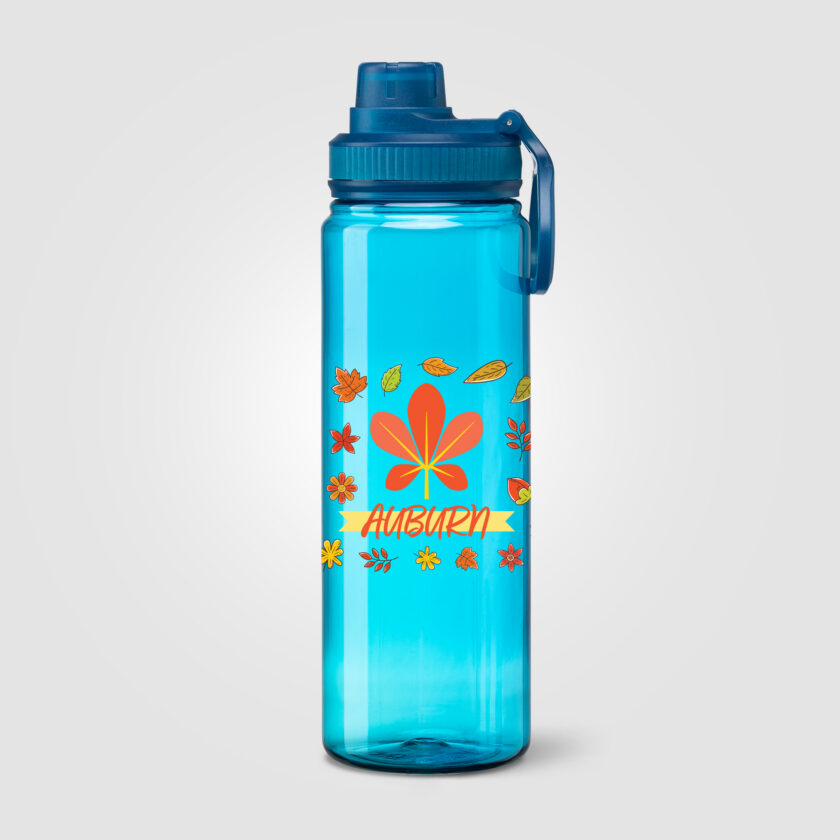
But with larger capacities come an important caveat: Don’t forget about the cup holders. (That’s why the Stanley Quenchers remained so popular.) Tapered silhouettes remain a popular option for minimizing refills on the go while still being actively functional for everyday use, says Stone.
Full-Color ‘Billboards’
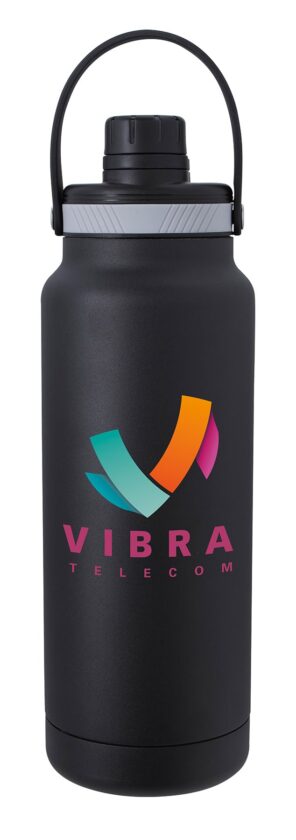
At Goldstar, Armstrong reports that bold, saturated colors are proving popular, especially in the education and events sectors. And that trend extends outward to how suppliers are thinking about decoration on those items. Unless clients are leaning into the subtlety of a tone-on-tone project, drinkware is being increasingly embraced as a “billboard” item – particularly as it’s become as much of a lifestyle piece as a functional one.
“We try to make sure the product is well-made and sustainable and has interest as it stands by itself,” Fox says. “But the minute somebody puts this big art on it, the product itself almost becomes invisible, in a way, because it’s really about the branding.”
Of course, that doesn’t always mean just enlarging the logo to the size of the imprint area. Stone says that ETS often takes an almost multimedia approach to decoration, combining decoration methods to create a final product that looks retail. The most common tools for creating that aesthetic, Fox adds, are leveraging full-wrap designs and full-color printing.
Placement
In addition to offering a larger imprint area or vibrant design, it also means getting strategic about artwork placement, says Stone. When you’re designing a mug, can you add a fun icon on the bottom of the mug so it’s visible when the recipient is taking a sip? Can you offer personalization on the handle of a tumbler, or ensure that the design of a water bottle means the branding can be seen no matter how the user carries it?
“How do I increase the number of impressions or the ROI on this piece?” Stone asks. “It’s all about capturing impressions from different angles.”
3-D Textured Decoration
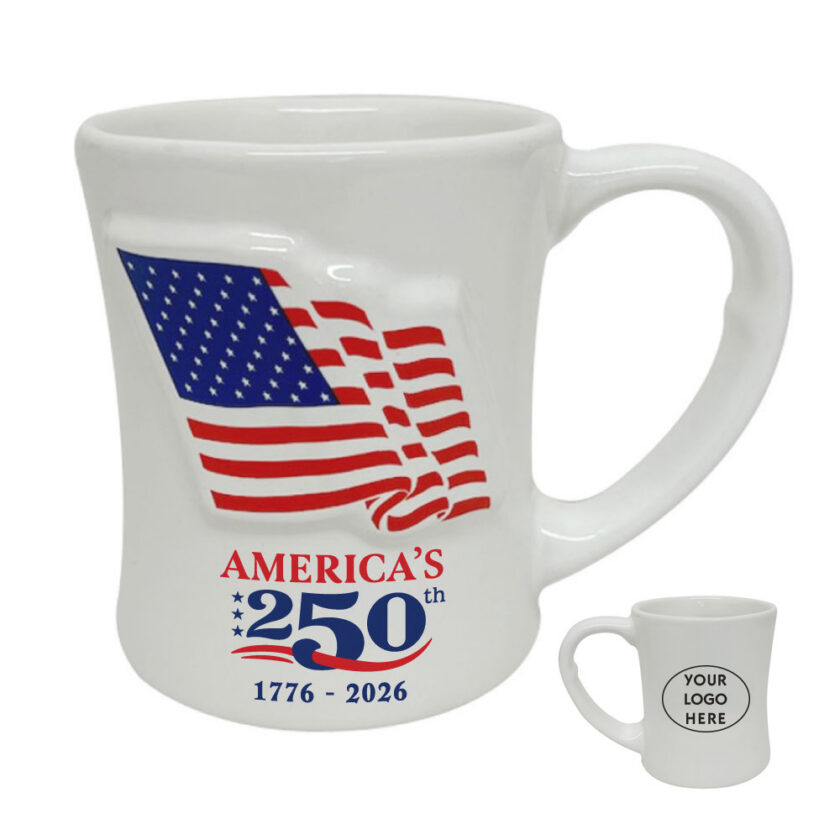
Anna Ramos, president of sales and marketing for Berney-Karp Inc. (asi/40261), says that her company has built momentum around its 3-D relief decoration technique, which pops a custom shape – including a popular option for an American flag ahead of America250 – out of the ceramic for a dimensional, textured design.
Because it’s at a higher price point, it’s a trend she says is particularly popular in retail, like at coffee shops or theme park merch stores – but the high level of customization available for the mug has been a key differentiator, especially considering they’re manufactured in the United States.
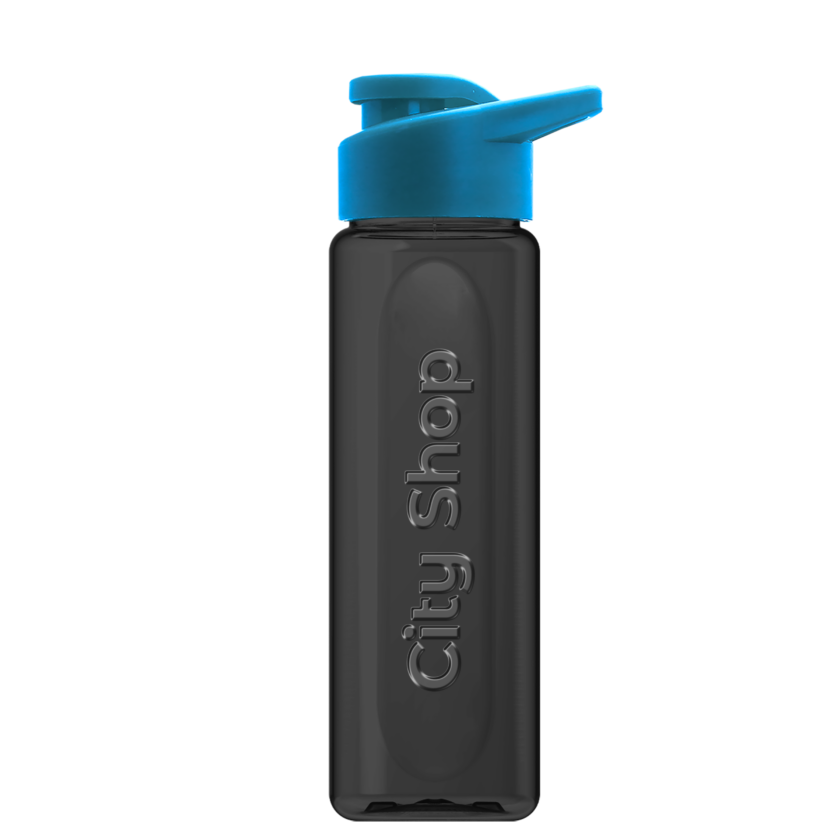
Koozie Group reports more interest in its Garyline bottles (which was consolidated under the Koozie Group name last year after the suppliers came under the same private equity ownership) for a similar reason, since more than 90% of Garyline’s production is made in the U.S. Textures, like its embossed sport bottles made from resin or rPET, would have been tough to accomplish domestically 10 years ago because of how custom they are – but it’s now a standout feature.
“The disposable product has gone by the wayside,” Fox says. “This is stuff they want to hang onto.”
Sustainability Sells
There has been a broader push toward more sustainable options in promo across categories, and drinkware is no exception, suppliers tell PPM. That extends to both item longevity – or, creating products consumers want to keep – and product development.
“Where sustainability used to be sort of an exception, now it’s become the rule,” Fox says. “The need for full transparency, for supply chain custody, showing that you’re not greenwashing – it’s core to who we are and what we believe.”
Armstrong added that eco-friendly materials such as recycled stainless steel, rPET or responsibly sourced bamboo are resonating with consumers across a variety of verticals, for example. But, importantly, those sales can’t come at the expense of sacrificing other performance features or functionality. Clients, she says, really want it all.
“Customers are looking for options that balance performance, durability and responsible sourcing,” she says, “rather than prioritizing any single factor.”
3 Quick Hits
Need more ideas? Here are three drinkware trends for small features that can make a big impact.
1. Metallic Accents
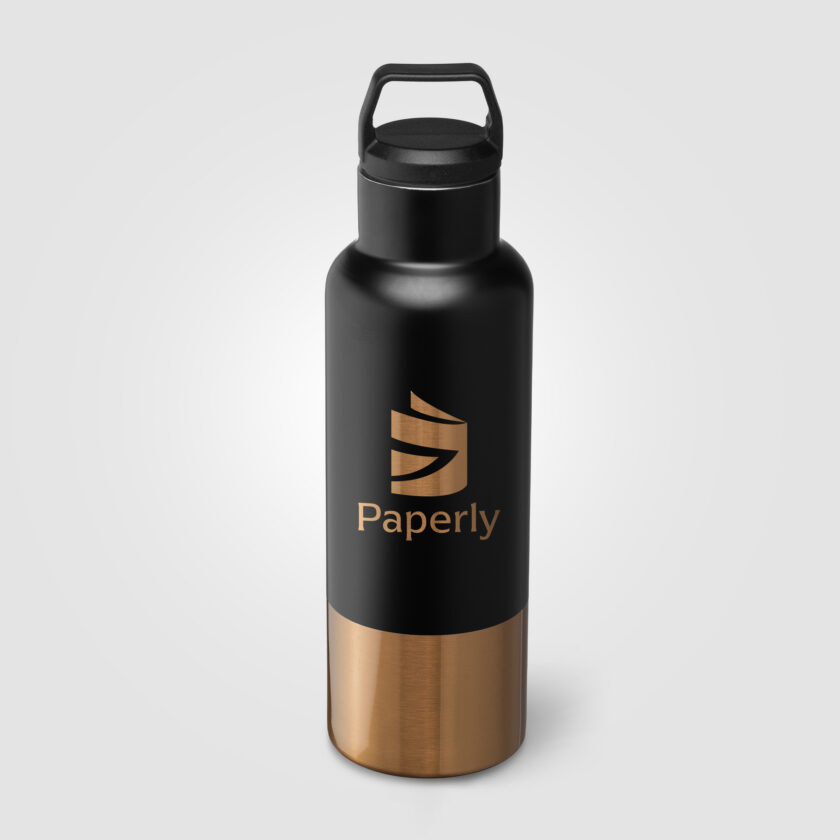
Whether for decoration, hardware or bottle features, metallic accents can help to build a more premium aesthetic in a drinkware campaign without breaking the budget.
2. Etched Ceramic
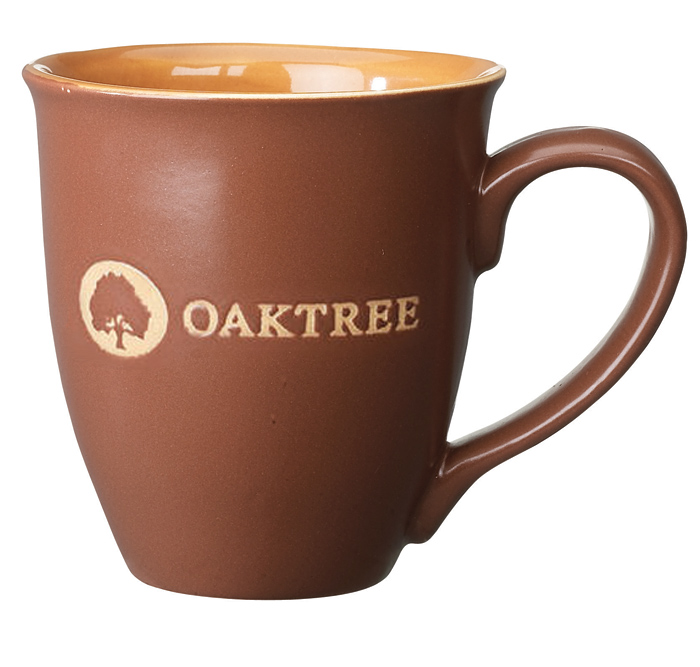
Often done with a laser before the glazing process, ceramic etching is a visually interesting decoration option that allows the natural color of the clay to shine through and create a logo or typography.
3 Soft-Touch Finish
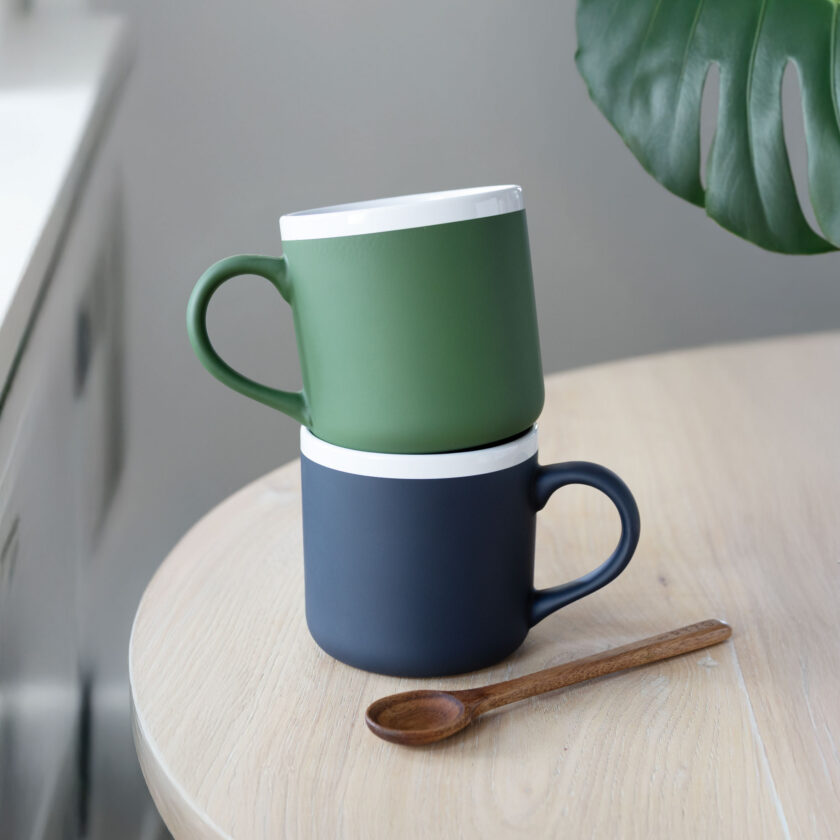
Growing in popularity as an elevated finish for drinkware items, soft-touch powder coatings have a velvety, cool-to-the-touch feel and matte texture.